Bay Area home prices continue to slip

Food and energy are excluded due to price volatility. I get that when looking short-term, but they should be considered for long-term. Especially when you’re talking about people living on social security since food and energy will make up a bigger percent of their spending.

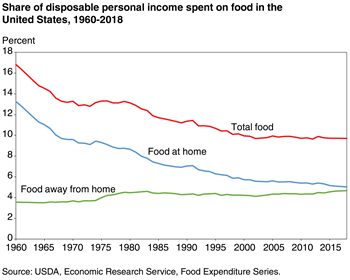
Food inflation is interesting though. Americans are spending a historically small percent of their disposable income on food.

image

Eating less or food as a percentage of pay is decreasing?

Considering the rise in obesity, I doubt people are eating less.

In that case, prices of other goods rise faster than price of food :slight_smile: or food price decreases :wink:

An interesting take by shadowstat people:

The October 2019 ShadowStats Alternate CPI (1980 Base) notched higher 9.5% year-to-year, from 9.4% in September, holding even with 9.5% in August. Graphs of that detail are found on the Alternate Data tab (also accessible by clicking on the mini-graph below), with the latest numbers and an inflation calculator also available there to subscribers.
http://www.shadowstats.com/

We just bought a Safeway Turkey for $.33/pound. Sure it was a loss leader and we had to buy $25 min at the store. But you could stock your freezer with several turkeys and buy a years worth of dry goods food for next to nothing, Food is very cheap. Restaurant food is related to high BA labor costs… a totally different issue. Another low cost item is wine, soft drinks and beer. There is a huge glut and always sales of off brands. Chicken breasts for $1.57 per pound are often found at Smart and Final. I have no idea how poultry producers make any money. Same with pork… pork loin often is $2/lb. pork shoulder $1.50. Cheaper per pound than fruits and vegetables. Rice and potatoes are practically free if bought in bulk.
Restaurant prices don’t matter. Consumers can always go somewhere else or cook at home. Gasoline is also very cheap if compared to inflation. Even with the CA gas tax. Plus cars are twice as fuel efficient as they were 40 years ago.
Biggest living expenses are taxes and housing costs. Food and fuel are a much smaller cost per the average total household budget than 40 years ago.

2 Likes

Pricing and inflation are two different things and impact consumers and producers differently.

According to Merriam Webster, inflation is a continuing rise in the general price level usually attributed to an increase in the volume of money and credit relative to available goods and services

On the other hand, price is what a consumer pays for a good or service at the point of sale.
Inflation is generally a fixed number. But, Pricing varies under different sale conditions.

For example, the same room in the same hotel in the same week of the year may have different rates on different nights depending upon the demand variations. And even if a hotel room is priced right, it earns 0 to the owner if it remains vacant on a night, the cost of real estate does not matter.

Similarly, perishable goods (most food items) loose value fast as they come closer to sell before date. You might be able to buy them for near scrap value if you know how to time your shopping. I see a lot of elders with coupons looking for a deal. Clothing loose values as they run out of season, or fashion. You can look for coupons from Kohls or Penny’s for clearance items. Go for a vacation and cruising offseason.

Most garage sales and yard sales hardly earn any money. It might be cheaper to just call hauling service and get the trash picked up.

Regardless of the price to consumers, the cost to produce goods and services is generally a fixed number. Producers generally do not have the luxury of buying raw material below market price, or they cannot always time it perfectly with the sale, or get a Groupon deal. The produces must make a profit on average even if they sell a few units at loss. It means they sell some units at higher than average profit.

A fairway to see the impact of inflation would be to study the prices of goods and services in the same condition over a period of time.
Economic analysis is incomplete without the assumption of Ceteris paribus: all things being equal.

The cheapest restaurant food I have ever know is McChicken sandwich at McDonald’s. Used to sell for $0.99. These days it sells for about $1.50.

Do you know how much the Safeway Turkey for $.33/pound in similar conditions would have cost you in 2010?
Consumers have choices. Fast food prices are skyrocketing because of Ca min wage increases. Same with apartments in the lower price points. Use local knowledge to save and make money. Macro inflation means nothing except to economists. Complain about it if you will. I prefer to beat the system and make money. I buy my gas in Nevada for $1/gal less than California. Same goes for shopping for food or Real Estate investments.

Expensive fast food is a good thing. Food should be good not cheap. I would rather see a tax on Big Macs than gasoline. The money could used for health care for the obesity epidemic.

To quote Voltaire … Tend your own garden.
As far as statistics. There are lies, damn lies and statistics.
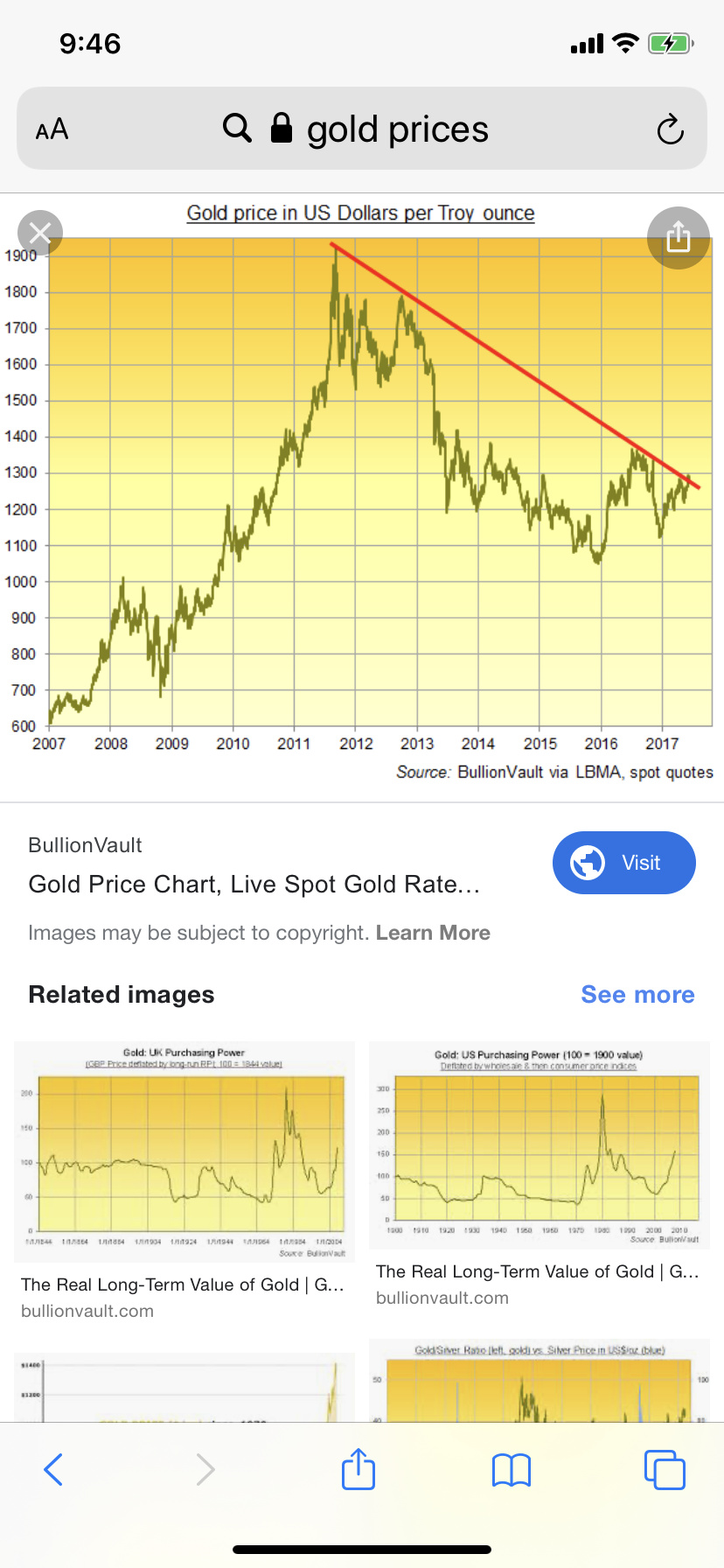
I am ready for inflation. Already growing a lot of my own fruit and vegetables. Grow and make my own wine. Will go solar soon on my farm. But the reality is the Fed thinks inflation is less than 2% and in fact deflation is actually the world’s problem… inflation hasn’t really been a problem since the 70s. Your shadow inflation index means nothing. I fact it seems be written by gold bugs. But both gold and oil have been deflated.

2 Likes

Thanks but your advice is impractical. I cannot do the kind of things you can do: I cannot grow my own grains, fruits, and vegetables. I cannot drive to the Nevada border to fill up gas. Actually, the tank would be empty by the time I reach my home in the bay area from Nevada after a fill. My yard is not big enough to grow food. Inflation has been harmful to me because it forced me to invest in risky assets like stock. Most of the time I do not understand stock movement, unlike many others on this forum who do. I have lost more money in the stock market than I have made. I would prefer to have a currency that is either stable or deflates. Because then my savings become more valuable over time and I am saved from taking the risk in the stock market. Deflation is good for savers because it makes their saving more valuable. Also, inflation has allowed governments and bankers to steal from my savings. There is nothing inherently bad about inflation or deflation as they are cyclical economic process with corrective influence. However, mindless money printing to run budget deficits to gain votes and to benefit bankers have not been good to my economic security. Artificial inflation has a bad impact on society. The swings in economic cycles have become wider and more devastating.

Mark Zuckerberg’s libra or bitcoin :slight_smile:

Inflation is low to nonexistent. For everything someone puts out as a sign of inflation there are two more that say otherwise. If you are a disciple of Milton Friedman, as most libertarians claim to be, you should believe in his famous saying "inflation is always and everywhere a monetary phenomenon.” That implies if there’s a lot of inflation it shouldn’t matter which goods you are looking at. Their price level should all rise because ultimately it’s the underlying monetary base that’s expanding.

1 Like

Inflation is general price inflation which is not specific to any asset classes.
Ideally, it is …
In practice, it is …
Asset appreciation = Asset inflation + value added improvement + society desirability

Society desirability is the main driver of RE prices in SFBA.

Actually the much deeper question is why there is so little inflation when every central bank is pumping liquidity. I suspect the answer is income and wealth inequality. The inflation we have now is primarily in asset prices like RE and stock. That means the printed money mostly goes to the rich people, and saved up to bid asset prices higher, instead of circulating in economy to improve people’s lives.

The technical answer is low velocity :slight_smile:

Inflation ~ Money supply * velocity
So if money supply is increased substantially by printing money, should have inflation if velocity is stable. Since there is low/no inflation, the velocity has to be low. Why is it low? Your explanation might be valid :grin:

We are finally getting somewhere. The trillion dollar conclusion is: tackling wealth and income inequalities would actually boost our economy. Imagine all those trillions getting spent and show up on companies’ income statement and workers’ salaries.

Nothing can be done if data is ignored. If $10 Lunch buffet costs $15 a few years later. What is it, if it is not inflation?

The idea that there is someone with enough wisdom and means to “track” and “guide” goes against the idea of free markets.

Inflation includes three things = creating additional units of money (printing) + increase in number of transactions (velocity) + credit.

All three above can result in too much money chasing too few goods, if the supply of goods and services do not increase in the same ratio.

Income equality arises when growth does not benefit all sections of society equally. Not everyone has access to credit or increased money supply compounded by loss of purchasing power . For example, TARP after the 2008 crash benefitted wall street but goods and services became expensive for everyone else. Free trade with China has benefitted the global corporations at the cost of labour in the rust belt.

The the US real median income was flat for about 20 years until recently. It goes back to before QE and near zero rates. It traces back to when productivity gains slowed. The 90’s were a golden period for productivity gains.

Productivity gains are the key to all of it. They allow prices to remain flat while wages increase.

If you want to unleash economic gains, start training people to fill the 6 million open jobs. Let people move up a job level or 2 and add 6 million more people working, paying taxes, and spending to the economy. It’d also help close the income gap.

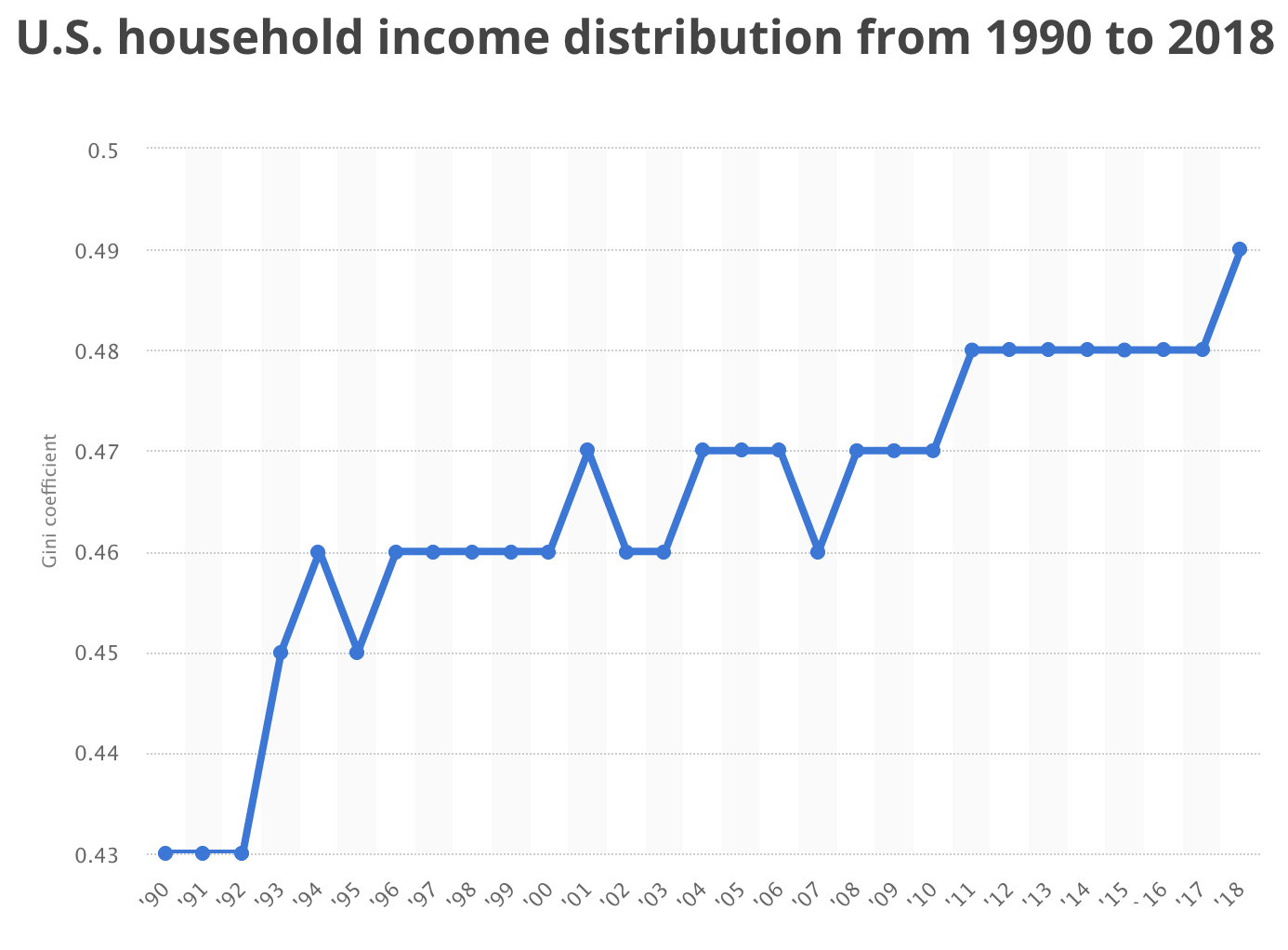
US Gini Coeff over time:

Nonfarm labor productivity has been rising, not flat: