actually. Most of my money also came from investing and building my portfolio over time.
The difference is that my financial goals have changed as my portfolio has grown. I was much more aggressive in the first half of the journey. I was willing to take much bigger positions and make bigger moves, but it was never really a do-or-die situation for me.
Take TSLA for example. There were times when I had 80% or even 90% of my portfolio in it. But I also knew when to take profits. I didn’t just buy it and hold it for six years. I was more into trading the swings and taking profits along the way. I’ve done the same thing with NVDA.
And I actually talked about INTC here a while back. That was probably one of my most successful recent bottom-fishing trades. The profit was just too big to ignore.
So… I’ve taken plenty of big risks too. The difference is that as I’ve built more wealth, I’ve become more focused on protecting what I’ve already made. I still take big opportunities when I see them, but I don’t feel like I need to put everything on the line anymore.
I guess the first half was more about building the wealth, while the second half is more about growing it without giving it all back.
Hong Kong doesn’t have capital gain tax. Trading works better there. In USA, we prefer tax deference i.e. minimum trading.
Your current NW is more than sufficient for a single person, but it still has room for a multi-generational NW.
Good Job.
Btw, my trading portfolio is less than 5%. Rarely long calls because I find I get distracted easily i.e. don’t watch my portfolio that closely. So a profitable position can turn into a losing position after I return from distraction.
Sure, everyone has their own style and what works for them. I have a friend who’s just like you with TSLA. He’s held it for a really long time and hasn’t sold a single share. For him, it’s almost a matter of conviction. He bought it really early at a very low price, and watching it gain over 1,000% in his account gives him a pretty amazing sense of accomplishment.
But when you look at his overall portfolio, TSLA is really the only position he can brag about, lol.
Over the past few years, there’s been a lot of debate around Musk and his companies. I think it really comes down to two sides.
On the rational side, people look at the business, the technology, whether what he’s doing actually makes sense, whether it can make money, and how strong the moat really is.
Then there’s the emotional side… whether you actually trust Musk, how his personality affects market sentiment, and how much his vision can get people excited.
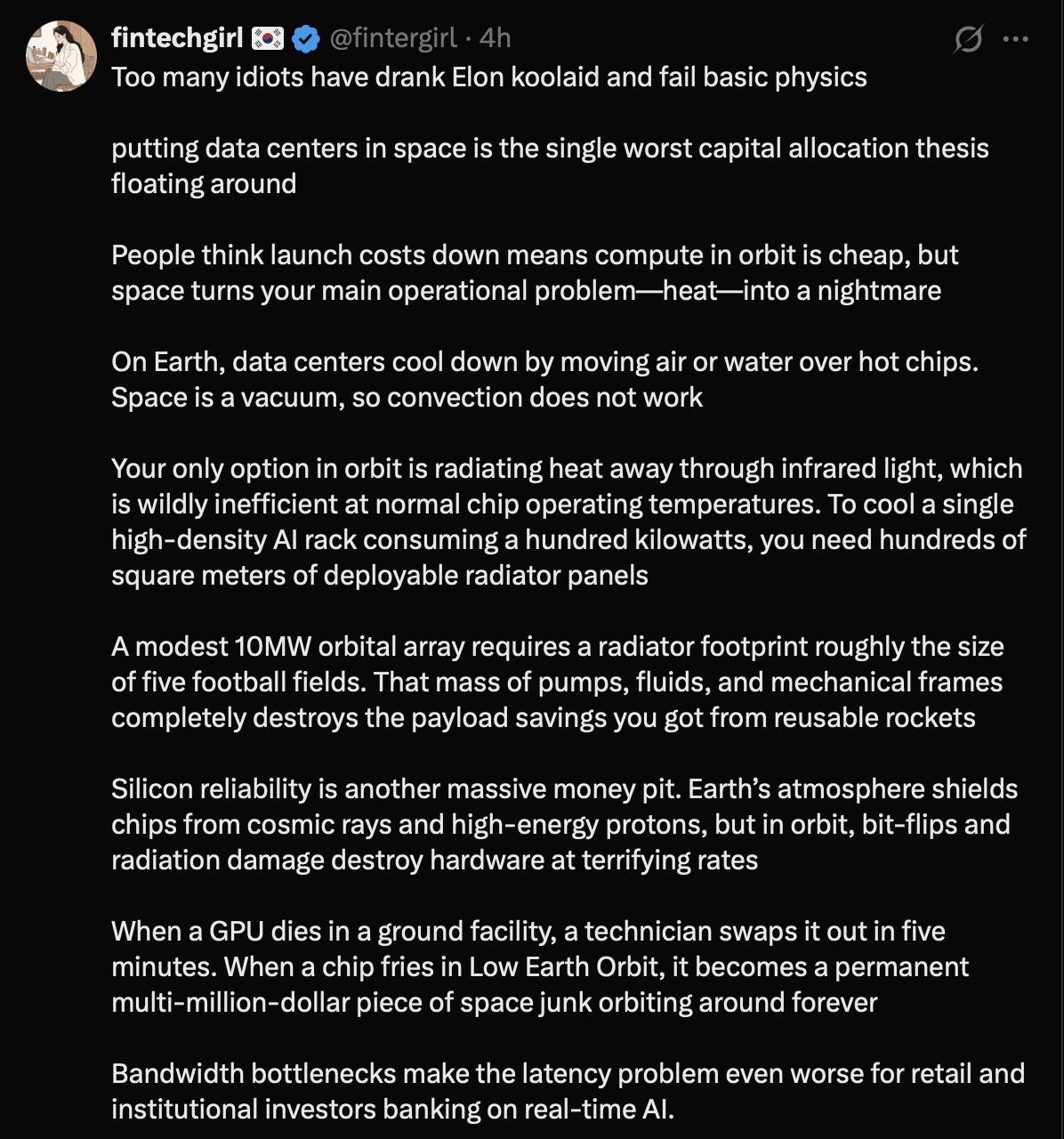
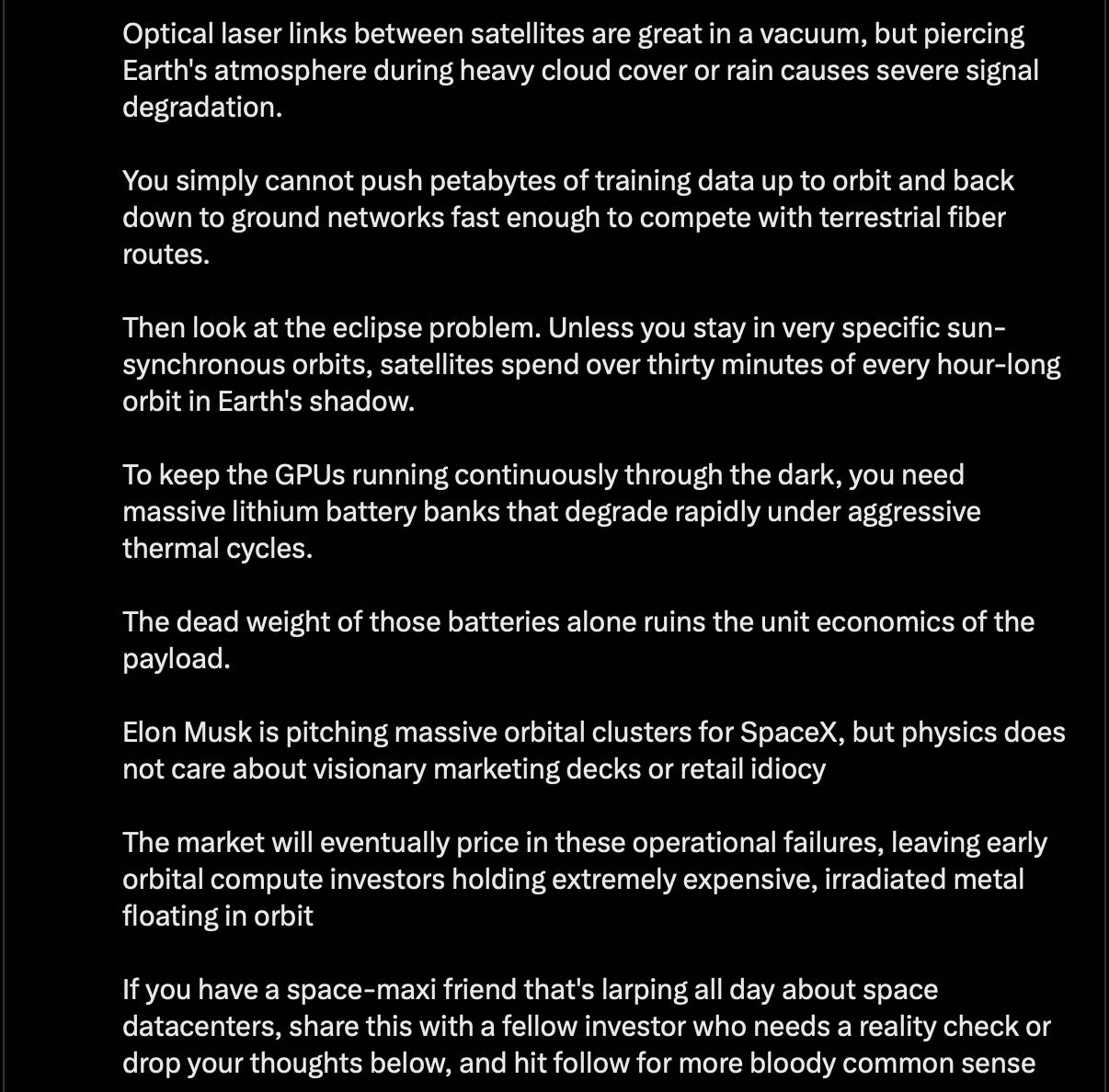
For me, though, buying SPCX is actually pretty simple. I just think the price is cheap right now and there’s money to be made. I’m looking more at the technology, the amount of capital going into the business, and the financials.
As for the whole space thing… Mars? lol. Tbh, I definitely won’t be around to see that happen.
Mine is like that. Caterpillar of all things (dumped it last month at 986 - needed to cut a mid-year check to the IRS because I blew it and missed Safe Harbor by about $80) and to a lesser extent Nucor.
I piled up what is currently worth about 12 million by mostly just DCAing over a 30 year period during which the market had an epic run. That and living way below my means as the folks were the Depression/WWII generation and taught me to live that way. I hit a few singles and doubles with stock options but never has a huge windfall. Salary maxed at 135k.
I’m actually educating my son to become the next tech titan. That’s how I gauge success. NW is good but only for my personal fulfillment; it is not necessary to hand that money down to your kids provided you do the right thing raising them.
Don’t have kids. It will likely end up with cousins who have fortunately been raised with brains in their heads. Yeah, in an average year I don’t even spend more than half the dividends. Sometimes much less. Most is S&P but I have some international and use DVY and SCHD as alternatives to holding lots of cash. Total yield is a little north of 2%. Taxes are minimal as it’s nearly all dividends. I pay Mitt Romney rates.
Looking at huge winners over time I found it interesting to note that super performers 2000-2010 were things like Rockstar Energy and a potash company. Super caffeinated soda pop and fertilizer. Another early winner that I actually held was Coke Femsa, a Mexican Coca-Cola bottler. Like Caterpillar and Nucor one should never ignore the possibility of making bank off boring. Tech isn’t all the action.
Early in my career a company I worked for was purchased by Union Carbide during a commodities down cycle. I remember a VP taking taking the greenhorn (me) under his wing and saying that Union Carbide’s hay days were long gone. I should sell it and buy Cisco. Between commodities recovery, the spin-off of Praxaire and the ultimate purchase of the company by Dow chemical Union Carbide saw a 100-200x gain in the next 15 years. Thank you so much Stan Conston. At least I didn’t buy Cisco.
A lot of the time, the market decides an industry is “old” or basically done, but if you’re patient enough to wait for the cycle to turn, the returns can be pretty incredible.
These days, though, people are way more focused on tech. Personally, I don’t trade a lot of traditional sectors, but when the overall market gets hit hard, I’ll usually look for a few good names in those areas.
And honestly, if you really believe in a company, then it’s just a matter of how long you’re willing to hold it.
As for what you said about 2000–2010, tech just wasn’t nearly as dominant back then. Cisco is a good example. But if you look at the last 10 years, Cisco obviously did much better than Union Carbide.
So I guess what I’m really thinking about now is the next 10 years.
Traditional industries don’t really go away because they’re tied to basic supply and demand. Tech is different. It’s constantly evolving…new products, acquisitions, bankruptcies, breakthroughs, whole industries changing.
That’s part of why SPCX is getting so much attention. Sure, Musk is a big part of the story, but more importantly, people believe commercial space is part of the future! just like AI and robotics.
It’s kind of like going from steam engines to gas cars, and then from gas cars to EVs. These transitions don’t happen overnight. They can take decades.