OpenAI just announced their latest o3 model that’s wicked smart. Some say it has achieved AGI.

One novel thing about their o1 and o3 models is that, result quality scales with inference resources. Before these models, it was assumed that the hard and resource intensive work was in the training, which is a one-time thing. Inference is supposed to be cheap, easy and fixed cost. Not anymore. Now the marginal cost of running the models has turned into a variable people can tune.
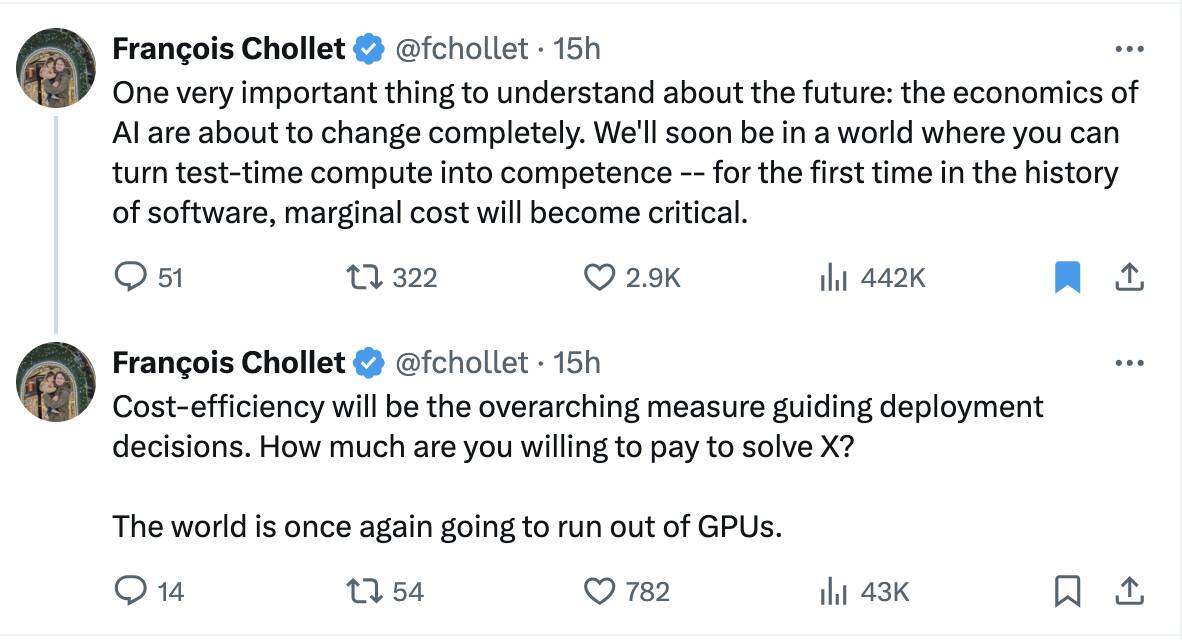
Inference may not be the commodity people assumed it was. Very bullish for Nvidia.
The way people develop software will dramatically change. Into what nobody knows yet. Many on Twitter predict doom for SWE. I am not so sure. But future CS grads need to know more than just software. I suspect getting a dual degree in business will be beneficial. If you compete on coding alone humans have already lost to AI.
Progress of AI shows no sign of slowing down. Earlier worries about hitting a scaling wall proves extremely premature. Again very bullish hardware providers like Nvidia.
1 Like
What about google’s TPU and Amazon’s inferentia for inference ? They are improving in efficiency as well
.
Together with quantum computing, dramatic change.
Doom for avg SWE.
That’s SWEs need to be of MBA quality or out of a job.
I recently pivoted to Gen ai solutions architect from data science. Let’s see how it goes!
4 Likes
I think o3’s inference is significantly different from prior generations’ inference. Haven’t read up the details yet. Just a hunch. It’s sorta like part of the training is now happening at the inference stage. So like training you now need a lot of compute and memory at inference time. Even though you are not modifying the weights, these resource hungry workloads can’t be handled by today’s specialized inference ASICs.
Again just a guess. Haven’t seen any good write up on o3 inference yet.
1 Like
Future is hazy. Pretty sure SWE’s will still be around. But their skill set needs to be broadened. Can’t be mere code monkeys. Need to get closer to the decision-making core of the business.
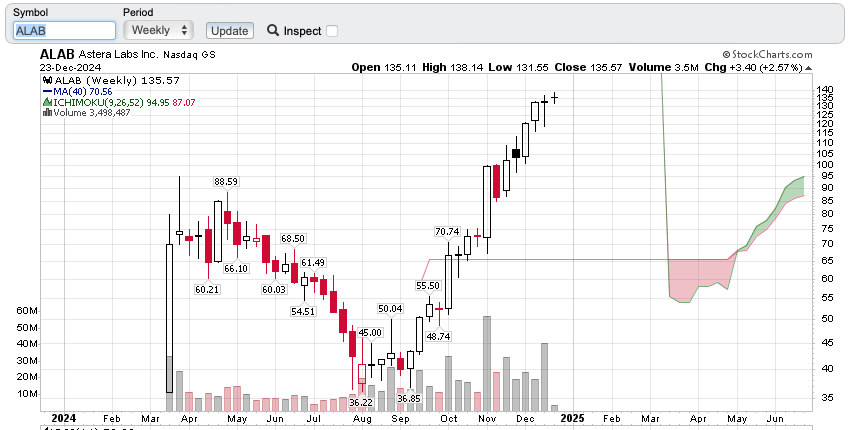
Nvidia cuda unbeaten yet
1 Like
Really good overview of the AI players.

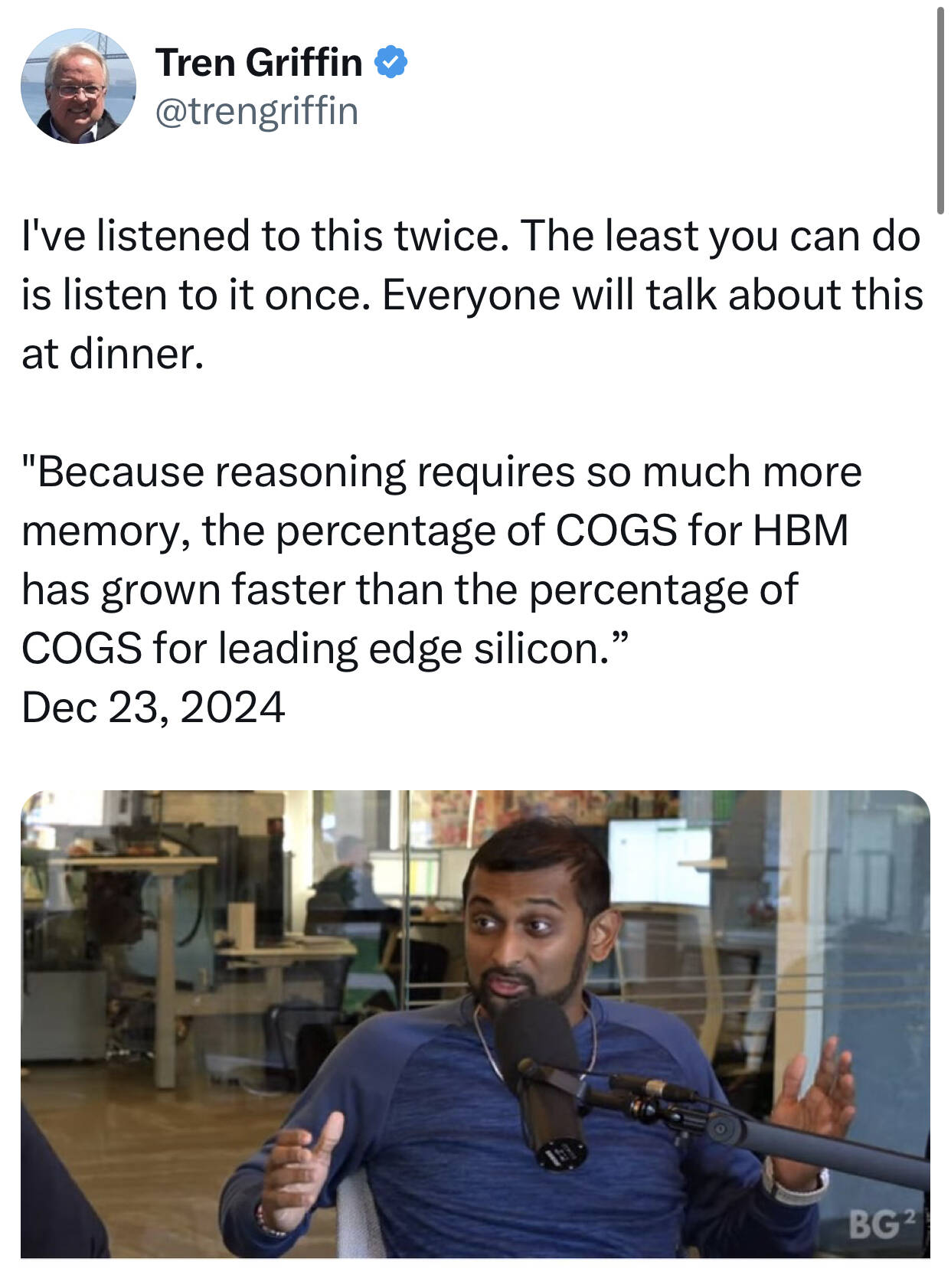
Bill Joy was right. Many years ago he said AI will need tons of memory. It just took longer for it to play out.
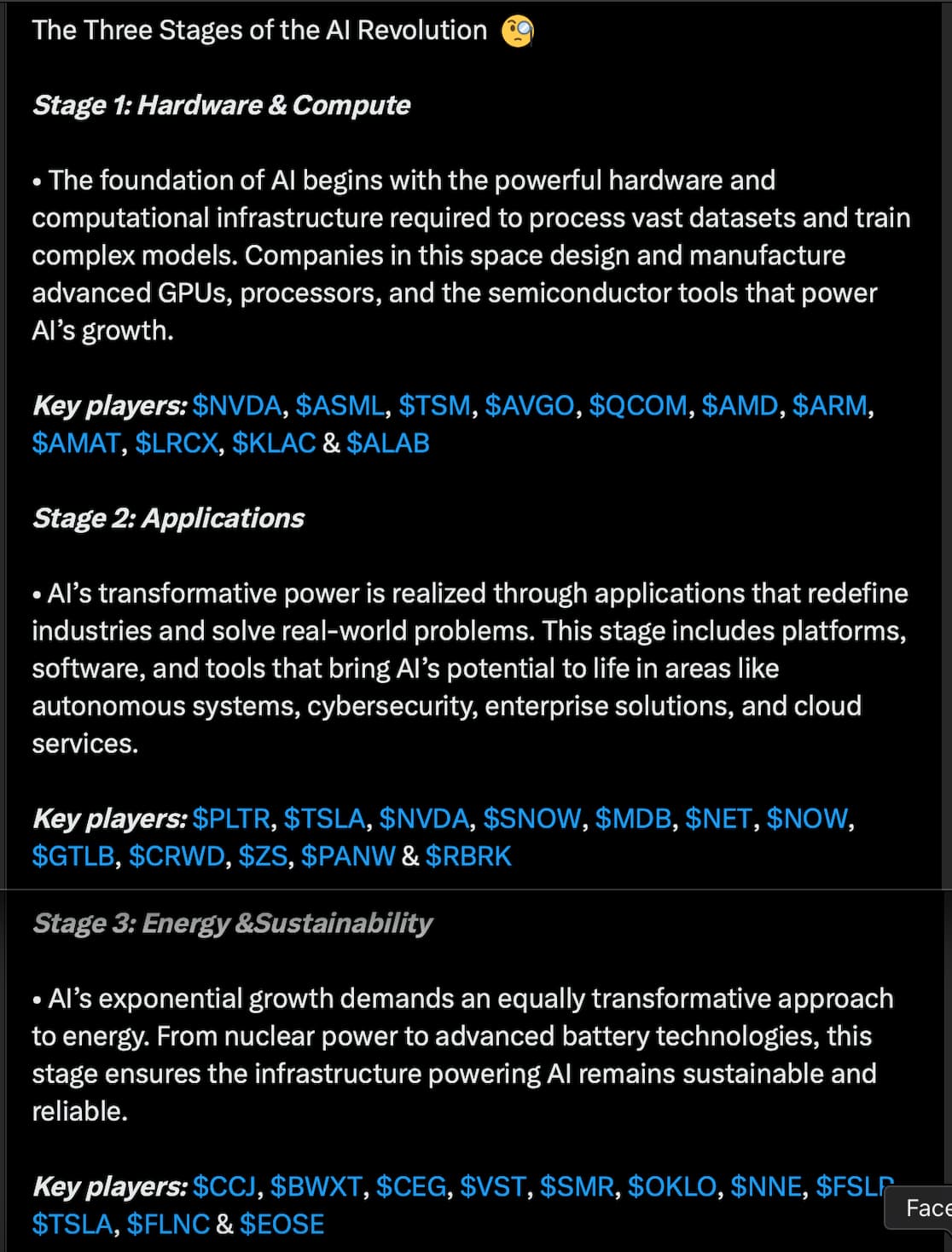
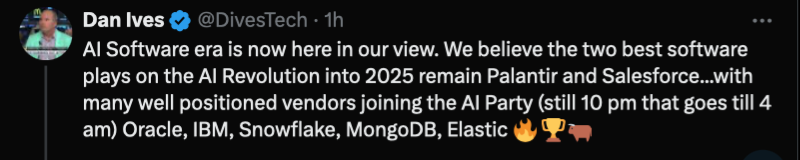
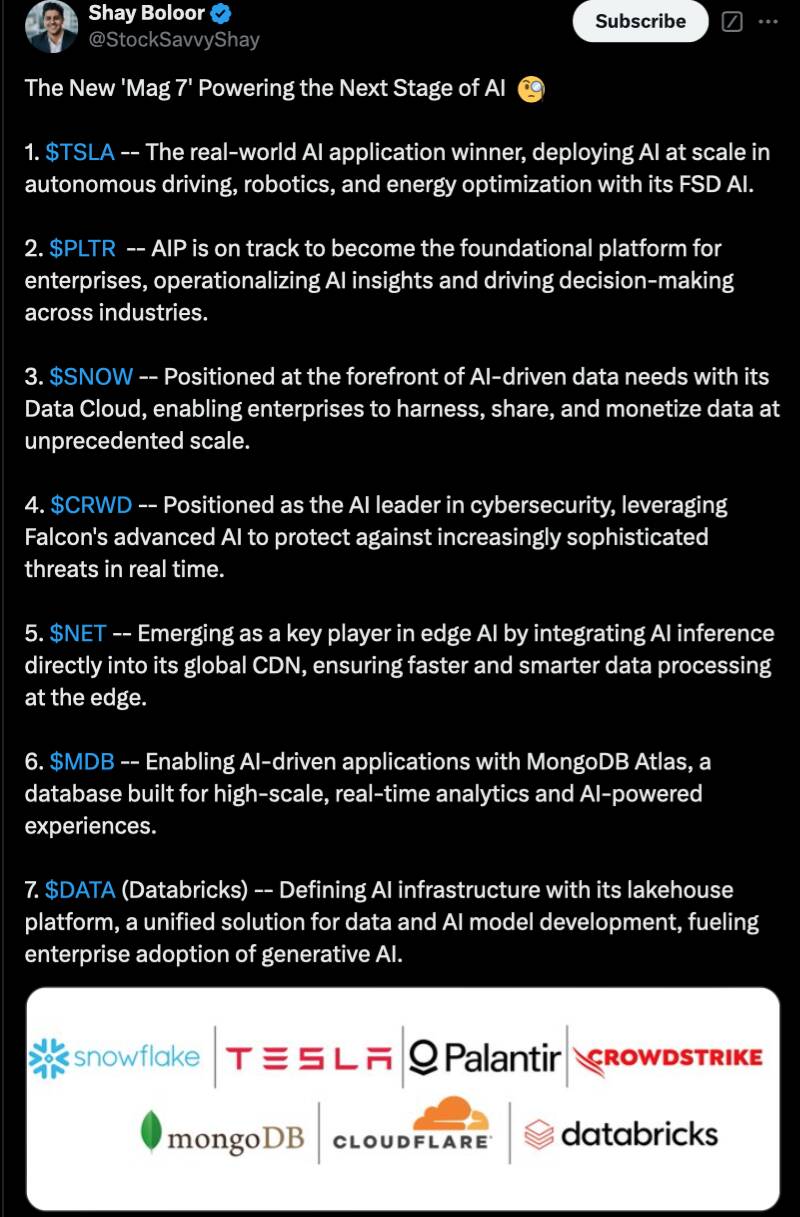
Disclosure: Own data stocks, CRWD, NET, PLTR and SNOW.
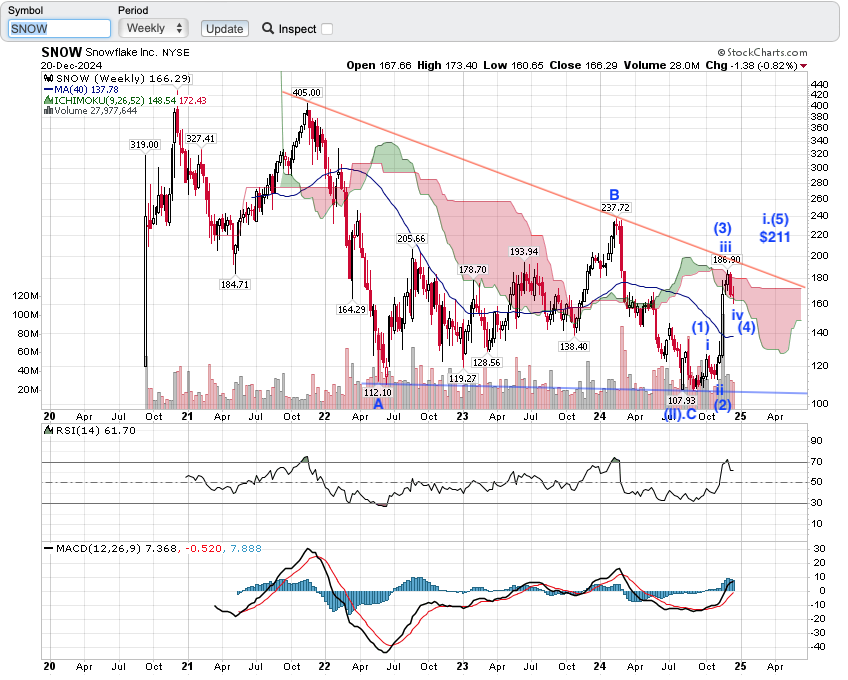
SNOW is rising from the ash. Rise above the resistance (down sloping red line) would confirm the bull trend.

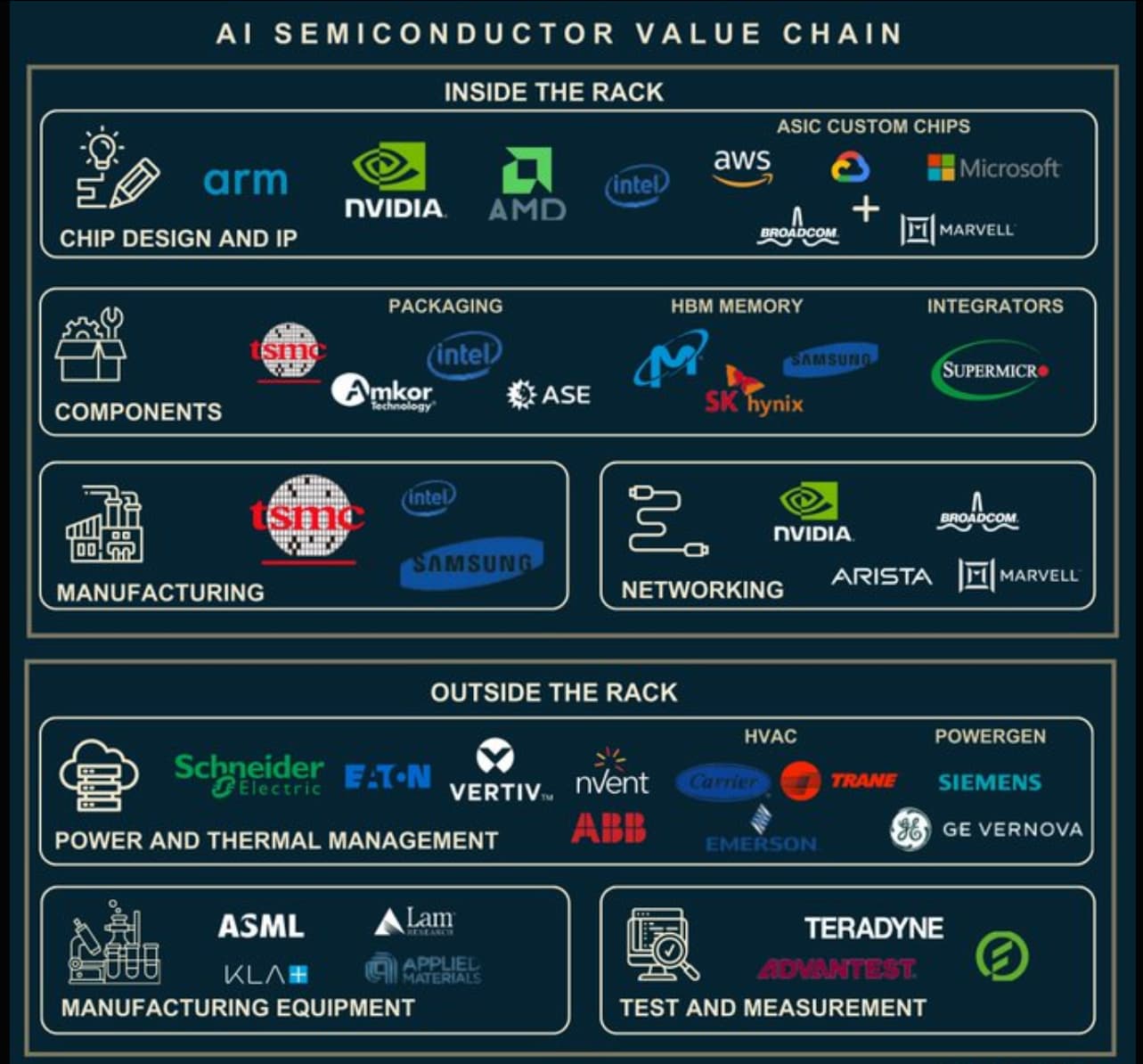
Regrettably, didn’t own any AVGO.
Dec 26, 2024
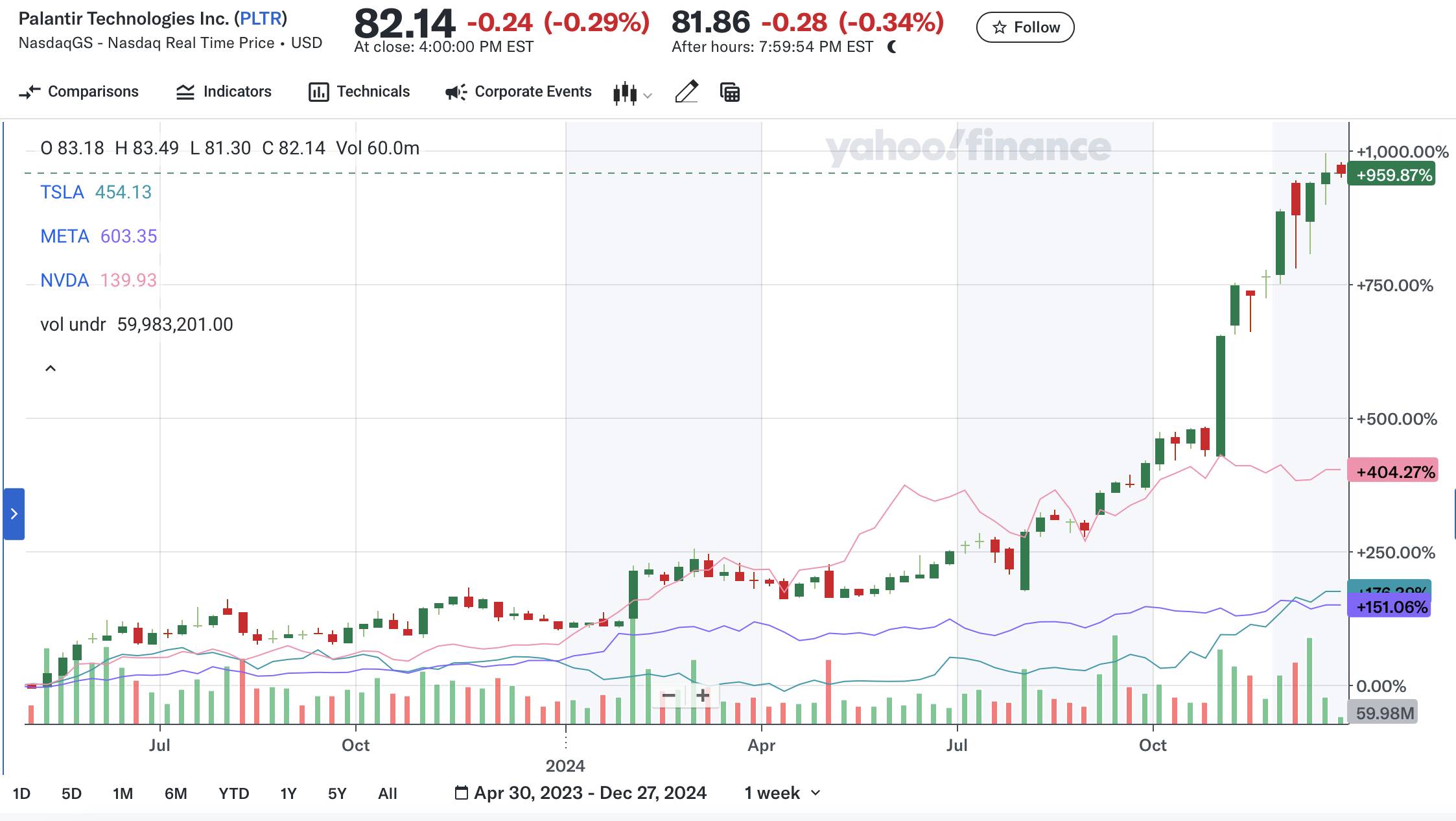
A junk stock according to some bloggers leave hot stocks, TSLA, META and NVDA in the dust. I don’t understand why some bloggers can’t understand a simple ontology-based AI stock and even think is a junk stock that would demise.
May 2023
1 Like
Nvidia is the new Apple.
In addition to Cosmos, Nvidia debuted its Isaac GROOT Blueprint for training humanoid robots. The software, which connects to Apple’s Vision Pro headset, allows a developer to perform and record specific movements they want to teach a robot. Isaac GROOT Blueprint then takes those movements and synthesizes them, providing the robot with an enormous set of movements based on the developer’s original motions.
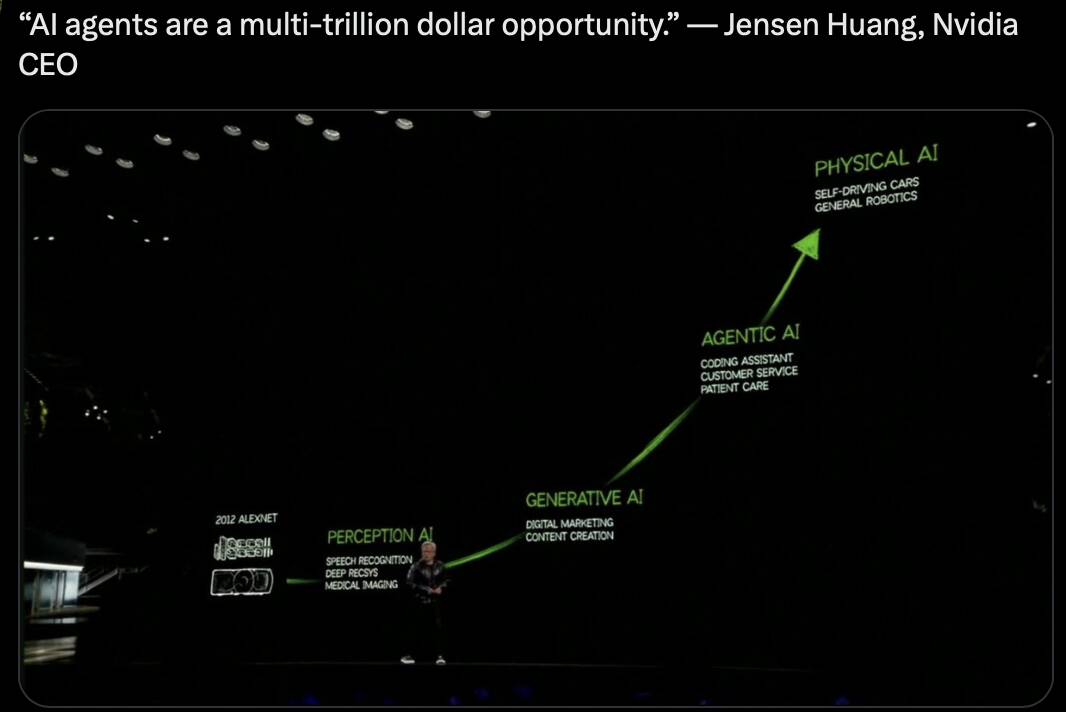
Like Apple in the Steve era, Nvidia is now the king maker.
3 Likes