Is it better to install a LED light fixture? Or regular light fixture and use a LED bulb instead? I guess it’s easier to change a light bulb. If you install a LED light fixture, you may need to get a handyman to replace when it reaches end of life
Go with a regular fixture. I found led bulbs at the dollar store…2 for 1 buck
3 Likes
I’m always wondering about that… they will NOT last forever… if they break… it’ll be more work than replacing a bulb.
For new construction, the building departments insist on LED fixtures or fixtures that only accept those pin-base CFL things. Incandescent fixtures where you put an LED or CFL bulb in - they are not accepted as “energy efficient”. Supposedly because a “bad” citizen could put an incandescent bulb in it. Even though those bulbs are soon illegal to sell.
They could make it optional and you are recommended to do it but not required to.
Big liberals love to take away citizen’s freedom
Liberals love to spend other people’s money…Feel good environmental laws keep driving up construction costs which mainly hurt the poor, the liberals base…Too bad they are to uninformed to vote in their own self interest…
Theoretically, you can get away will incandescent lights. When submitting plans for a new house, you need to achieve a certain number of green points. Many points are super easy to get, e.g. use “OSB” type plywood instead of traditional plywood. OSB costs only 50% of regular plywood, and is made of scrap and glue… which they consider worthy some points. Just don’t let water get near it.
If you add a photo-voltaic system, and a ton of other stuff, then you might not need an energy efficient light system.
To give an example how stupid those rules are. I remodeled a kitchen with permit and the kitchen had an existing halogen light fixture with 4 spot lights that I wanted to keep. I could not find a similar LED fixture at that time. I actually had 4 “retro” LED “bulbs” in there… see this photo:
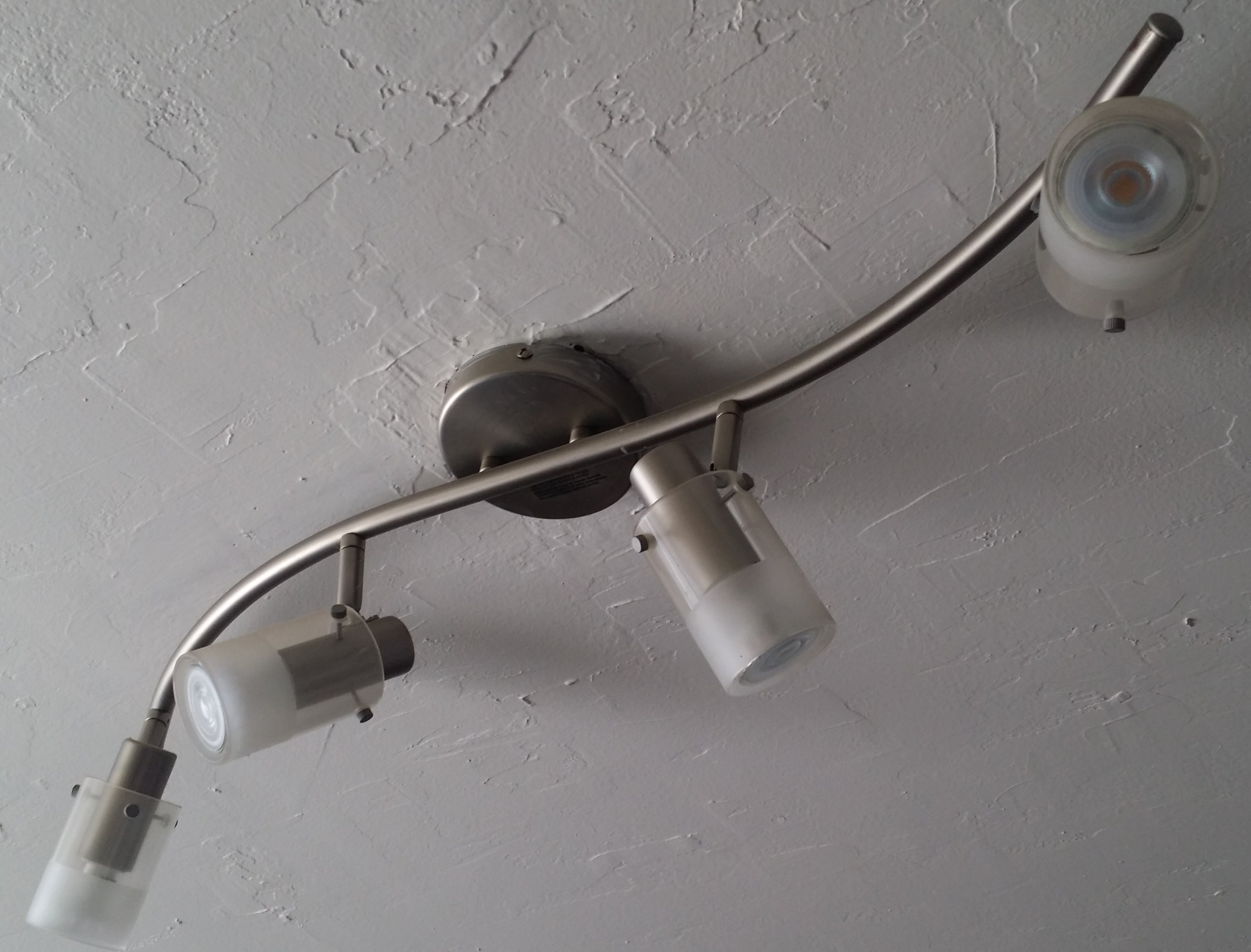
Besides the ceiling light, I had 4 under-cabinet light strips @ each 10W.
Calculation:
1 ceiling light (rated 50W each socket): 4 x 50 = 200W
4 under-cabinet light strips: 4 x 10W = 40W
Total wattage: 240W
% energy efficient: 40/240 = 17%
FAILED.
Solution: Find under-cabinet light strips that consume 18W and squeeze in 2 more. Add some LED pendants over the island. Make sure to buy the pendants with the most “bulbs” to consume the most electricity possible!!
1 ceiling light (rated 50W each socket): 4 x 50 = 200W
6 under-cabinet light strips: 6 x 18W = 108W
4 hanging pendant lights (each has 3 LED): 4 x 27W = 108W
Total wattage: 416W
% energy efficient: 216/416 = 51%
PASSED! Rule is: at least 50% of the energy used by lighting has to be to “permanent” energy efficient.
Before anyone asks about cheating. The building inspector wanted to see the packaging of the LED fixtures to verify that they use enough of the “good” electricity.
2 Likes
It is stupid for inspectors to focus on light fixtures. They can be removed and replaced without a permit. Their job should be focused on stuff inside the walls. Plumbing lines, wiring structural items.
2 Likes
We have regular fixtures and all LED bulbs through the house for sometime. No burned out ones yet.
Discussion of “50% of wattage lighting must be high-efficacy lighting” aside (and ptiemann illustrates an absurd side effect — he/she essentially DOUBLED the kitchen’s energy consumption to meet “Green” rules) — I find that halogen-retrofit LED bulbs are very very good these days. You can get LED retrofit GU10 MR16s (line voltage) or LED retrofit GU5.3 MR16s (low voltage) that are super close to 50W halogen bulbs now ---- while consuming on 6W - 7W each.
The super cheap ones are $1-$2 each are often lousy with poor lighting characteristics, but once you get into the $4-$6 per bulb range, they are very nice indeed.