I understand what you’re saying, and honestly, I think there’s a lot of truth in that concern. I wouldn’t just dismiss the possibility that the economic environment we’re dealing with today is very different from what we saw in previous inflationary cycles.
I’ve lived in the U.S. for some years now, and coming from Hong Kong, I probably look at the American economy a little differently. I’ve seen different financial systems, currencies, interest rate environments and capital flows, so I tend to pay alot of attention to how debt, liquidity, rates and money moving around all connect with each other, instead of looking at inflation or interest rates by themselves.
I also agree with what you said about the cost of money. After so many years of very low rates and easy money, it has become a much bigger part of the economy. Higher rates don’t just hit consumers. They raise financing costs for businesses, real estate, infrastructure and pretty much the whole debt structure. So yeah, I do think it makes the Fed’s job alot more complicated than just raising rates and hoping inflation comes down.
Where I see it a little differently is that I don’t think we can assume the worst case is going to happen. There are still alot of moving parts, and the U.S. economy has always had a pretty strong ability to adjust. That’s why when I make investment decisions, I try to look at the short term, medium term and long term separately.
For me, traditional investment strategies just don’t work exactly the way they used to either. Fundamentals and valuations still matter, of course, but so much of the market today is driven by sector rotation, where the money is going, industry cycles and near term catalysts.
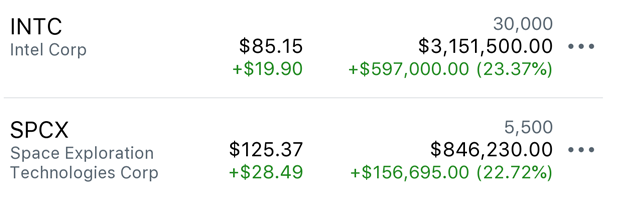
And honestly, I think that’s one of the biggest differences between older investors and what we see today. Years ago, you didn’t see nearly as many people willing to put $200K into options instead of actually owning the stock. Now you see it all the time. That tells me alot about how much the market and investor psychology have changed.
So I definitely take your worst case scenario seriously. I just don’t think we’re at the point of saying it’s “survival rather than investing” yet. I’d rather keep watching the data, the Fed, where capital is moving and how different sectors are reacting, then adjust when the picture changes.
That’s really how I’ve come to look at the market over the years. Stay flexible, protect your capital when things change, and don’t get too attached to one strategy. Sometimes the market is going to prove you wrong, and you just have to be willing to admit it and adjust.
I’m probably a little too wordy, lol