The nascent video gaming industry fit the bill. “It could be one of the largest computer science industries the world has ever seen,” he says. The data-intensive video processing and simulations needed to create imaginary gaming worlds turned out to require the same sort of computing resources required for scientific computing, he says.
Staying flexible, Nvidia evolved from a maker of PC graphics cards, an intensely crowded market, to a creator of graphics processors called GPUs. A major step came in 2007, when Nvidia created the software to program GPUs for more general-purpose computing tasks. Mr Huang’s move to broaden their use was widely discounted in the chip world at the time but it has paid off with the rise of AI.
Riding the ups and downs has taken a high level of intellectual self-assurance. Two years ago, the bursting of the cryptocurrency bubble hit Nvidia hard, as demand for crypto “mining” computers dried up. Mr Huang says that is why SoftBank’s Vision Fund — one of his biggest backers — sold out in 2019.
Mr Huang barely blinked, insisting that nothing had changed in his company’s prospects. He was rewarded with a rapid rebound, both in the business and the share price. SoftBank, as the owner of Arm, has now agreed to take a big slice of Nvidia stock as part of the sale — effectively buying back into the company at a far higher price.
If Mr Huang is feeling smug, he does a good job hiding it. He refers to the decision by Masayoshi Son, SoftBank’s founder, to sell out of Nvidia two years ago with a laugh. “It’s understandable, I forgive him. He’s completely redeemed himself,” he says.
With the unshakeable conviction that lies behind all his big technological gambles, he adds: “In five years’ time, we’re going to look back on this as one of the deals of this century.”
if there’s a market crash, there will also be an opportunity to buy Micron Technology (NASDAQ:MU), Cirrus Logic (NASDAQ:CRUS), and Taiwan Semiconductor (NYSE:TSM).
There appears to be an inordinate amount of bullishness surrounding Micron’s stock.
Officially we are very bullish on Micron and believe the stock will see considerably higher prices within the next year. The recent highs of mid-60’s will most likely be retested.
Spent whole day doing call replacement hedging strategy, raising cash to over 80% Need to look for alternative stocks.
Although MU should have benefited from the digital transformation and proliferation of data centers but is trumped by the Huawei headwind. This forces me to liquidate the shares, reduced holdings by 75%
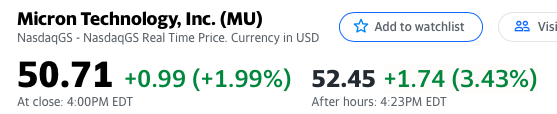
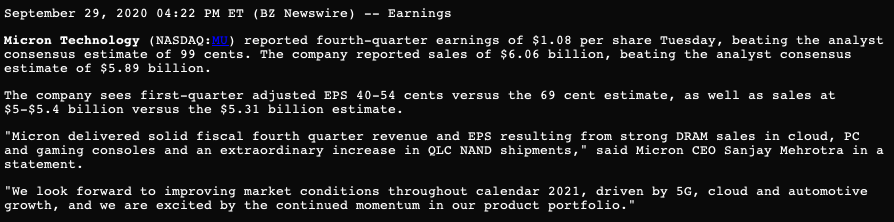
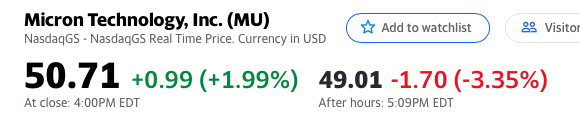
Actually I expect a pop to $52s after earning. However, also expect a pop on open and then slide immediately. So prepare for this expectation. If it happens, my loss is limited. If it didn’t I can coolly close the calls for a nice but slightly less profit.
Not sure which way earning on Sep 29 would bring. Hence, the call replacement hedge.
Was thinking of long straddle to exploit the possible counts but won’t work because straddle (Oct 2 $50) is priced around $4 i.e. make money only if >$54 or <$46, profitability is too low to bet.
I lost track of all individual stocks, but I guess MU is good for puts as I expect price drop. This is wild guess, exactly like TSLA.
Investors propped up TSLA for the battery day event, then dropped after announcement. Similar to it, MU is being held at high value expecting major break through in sales/profit.
Whatever best they declare, even if the double it, market will drop it.
If MU drops after good results, like TSLA, keep buying as this is safer than betting ahead of results.
On any case, use the highest open interest (oct 16th or Jan 15th) options, good for liquidity and buy/sell spread is low with high volume.
I may be right or wrong 100%, take your own decision.
Low hedge against long may benefit if there is a big fall. If stock raises, you lose all your hedge insurance. I stopped all speculative trade on results. It is like tossing the coin 50:50.
I am not xpert in this kind of technical analysis, and that too individual stocks. Individual stocks are based on fundamentals long term, short term technical fluctuations.
Mine is only with index funds and the logic is my own proprietary logic like mean reversion with black-scholes models. I can not apply those to individual stocks (High failure rates).
If you remember, I blindly buy good stocks when they fall deeply like TSLA at $330, after that I do not care whether it goes up or not, just hold. If it falls again 10% (of peak), I add more.
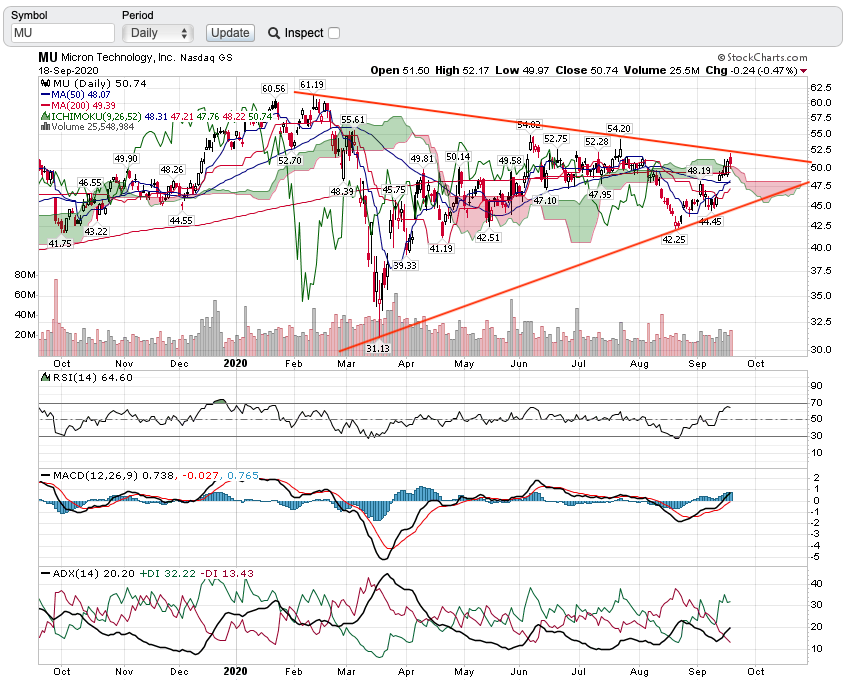
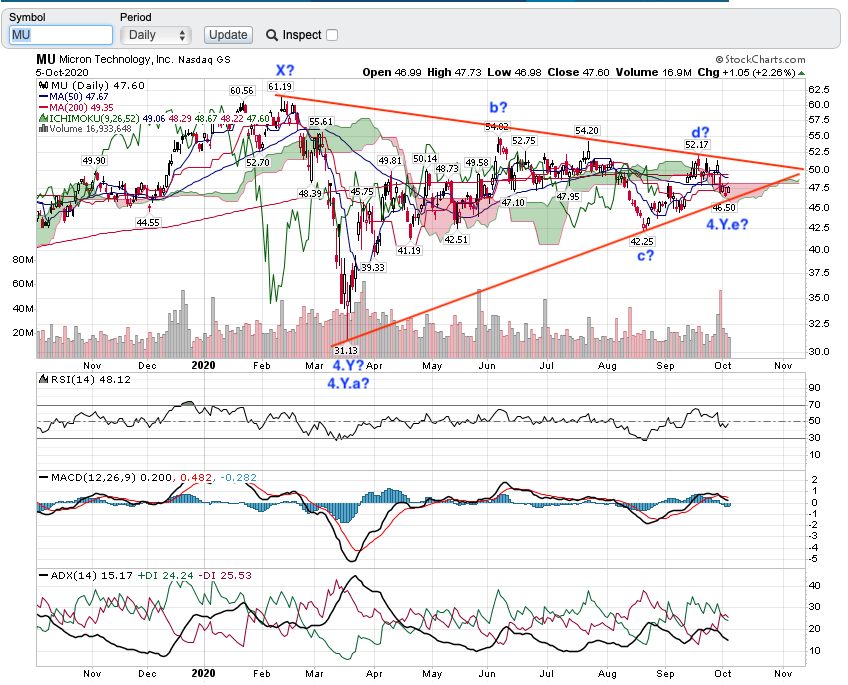
 What’s next? Try again coming week? Or test lower channel?
 for trading
 Need to look for alternative
  stocks.
 by the Huawei headwind. This forces me to liquidate the shares, reduced holdings by 75%
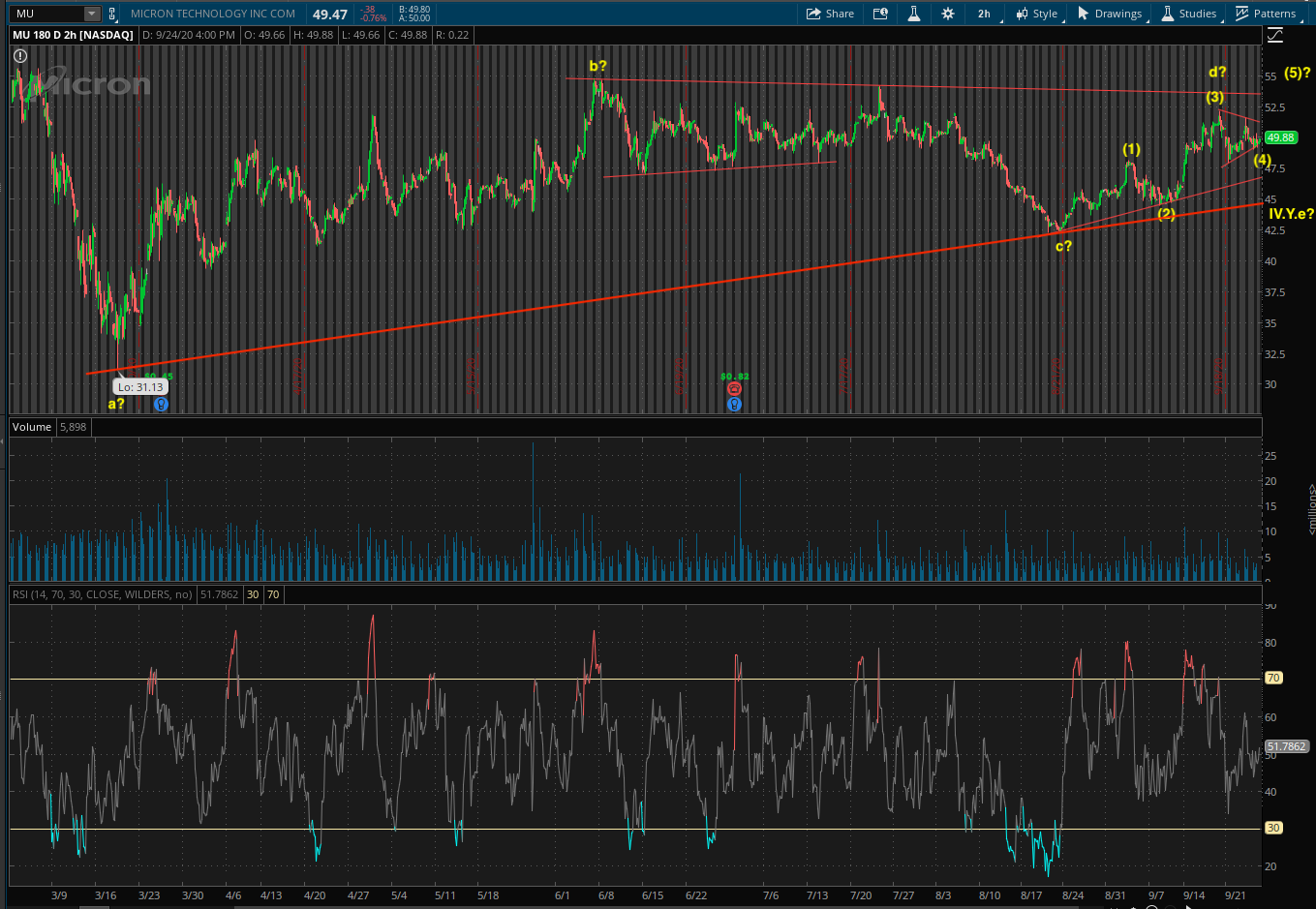
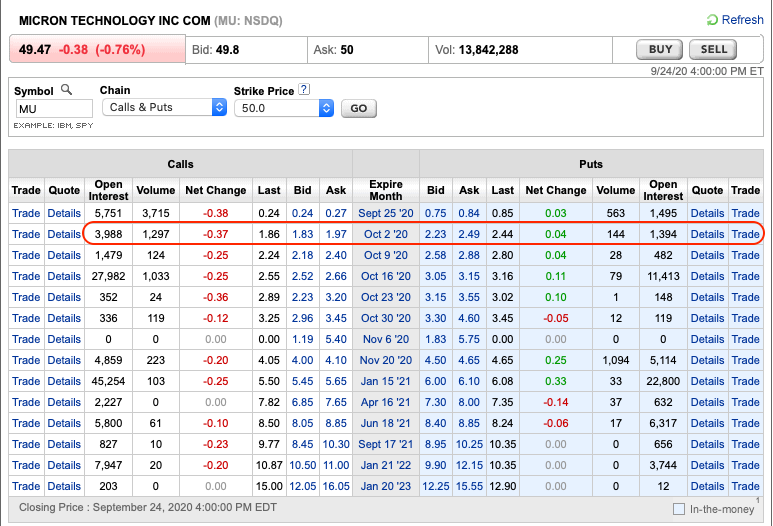
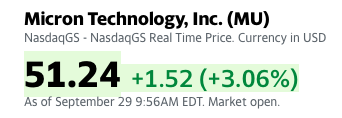
 to $53-$55? Hopefully is not during AH, hate it if that happen because likely to go down next day killing my calls.