You have not noticed ZM (zoom) jumped 75% today on IPO day. PINS is just 25%.
All are hyped to create FOMO to retail investors.…
You have not noticed ZM (zoom) jumped 75% today on IPO day. PINS is just 25%.
All are hyped to create FOMO to retail investors.…
Most would end up like SPOT and SNAP.
Rhodes noted that Spotify (SPOT) and Snapchat (SNAP) are also examples of consumer-oriented IPOs that were widely heralded that have since experienced some growing pains.
Ponvert also thinks that investors need to find a clear industry leader. And the one unicorn that he is most excited about is a company that has no presence in the consumer market.
“Palantir is the most interesting one I’m waiting for,” Ponvert said, referring to the Big Data firm backed by Peter Thiel that has a private market valuation of about $20 billion.
Trust Peter Thiel? @wuqijun would buy thousands, right?
No faith in Peter Thiel. I only trust Elon Musk.
Lol, idiots:
Videoconferencing company Zoom and social media site Pinterest both debuted on the public markets Thursday and immediately rallied from their IPO prices. But Zoom went up significantly more, giving it an early valuation of $16.7 billion, topping Pinterest’s market capitalization of nearly $13 billion.
That’s a surprising development considering that Zoom is less than half the size of Pinterest, based on the latest full year of sales. Zoom reported revenue of $330.5 million, while Pinterest generated sales of $755.9 million. Pinterest generates revenue by selling ads, while Zoom sells its videoconferencing software to businesses, including 344 that spend more than $100,000 a year.
But Zoom is growing faster: Sales increased 118% between the last two fiscal years, while Pinterest grew 60%.
Zoom is also profitable. It recorded $7.6 million in net income, while Pinterest had a net loss of $63 million.
In the fiscal year that ended Jan. 31, Zoom spent $33 million on R&D, or just 10 percent of total revenue. That’s a much smaller share than other business software makers, and less than half the median R&D percentage of its peer group, according to Redpoint Ventures’ Tomasz Tunguz. For example, Atlassian’s development cost accounted for over 40 percent of its revenue, while smaller companies like Zendesk and Hubspot both spent over 20 percent of their revenues on R&D.
It’s a no brainer. Eric Yuan has connections in China. Stock is pretty much recession proof because people will rely on video conferencing and reduce travel to international offices when it’s time for budget cuts.
Why is Zoom not a commodity? That’s the part I don’t get yet. Video conferencing is built into pretty much every collaboration software. Tons of free alternatives as well.
Zoom’s competitors are buggy, but I think their problems will eventually be solved in due time. Too much good news already built into ZM that I think unless something groundbreaking happens there is little upside.
It’s amazing how badly Cisco dropped the ball after buying WebEx. It was cutting edge at the time.
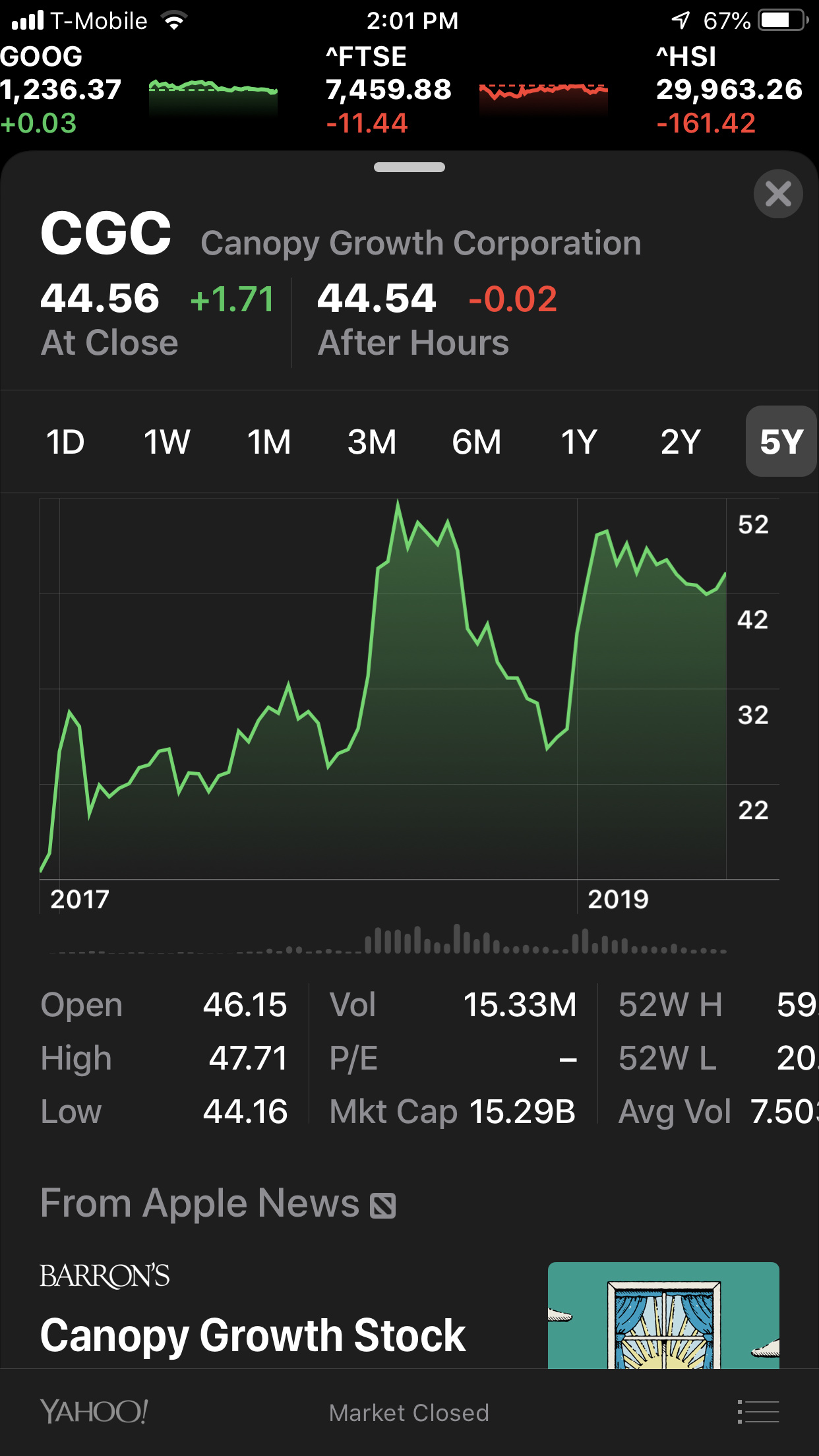
using CGC and TLRY, last year I made money. I bought TLRY $58 and sold $215 (hyped). CGC is one of the best as it was funded by STZ (which I have). All cannabis are next bitcoins !
Reg STNE: If some banks, Say ITUB, are giving zero interest rate, to kill competition, when market rate is at 8% do you think that ITUB bank will survive long run? STNE will recover soon even though ITUB is big bank as they can not sustain returns.
As of date, I doubled my amount.
Cry me a river:
Lyft Investors Sue Over Slump, Claiming IPO Was Overhyped
Lyft Inc. was sued by investors who claim the ride-sharing company overstated its market position when it went public last month, leading to a dramatic plunge in its stock price.

Before starting Zoom in 2011, Yuan was an early employee at WebEx Communications, an online conferencing firm, and then worked at Cisco Systems Inc. after it acquired the company for $3.2 billion in early 2007.
Yuan came up with the idea for Zoom – which counts Uber Technologies Inc. and Wells Fargo & Co. as customers – after repeatedly traveling 10 hours to see his girlfriend while they were college students.
“Someday, if I can have a smart device and with just one click I can talk with you, can see you, that was my daydream, right?” Yuan said in a July interview with U.S. venture capital firm GGV Capital. “And every day I thought about that.”
“Every Uber ride in Minneapolis makes a Bay Area Victorian a smidge more expensive. Every small business running ads in Little Rock, Arkansas, raises a tower a tiny bit higher.”

This is the real problem:
Only 5,471 properties changed hands last year out of almost 400,000 housing units.
The root cause of housing shortage is Prop 13 and its derivatives.
Fully 51 percent of them worked in software. They bought in specific, desirable neighborhoods closer to San Francisco’s tech companies, as well as the highways and train lines that lead south into Silicon Valley. They were less likely to buy in the foggy Sunset, which is the worst commute to tech businesses.
Sunset sucks.
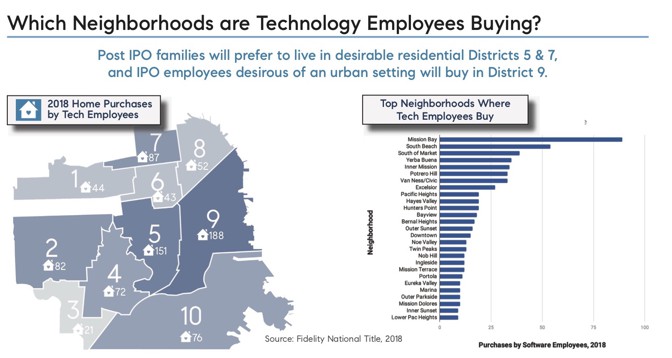
Historically, the south side of the city was racially and ethnically mixed, a patchwork of different communities brought by the work that has pulsed through the city, as well as the home of the nation’s most prominent queer community. But as industrial work trickled out of the city, the tech industry moved in, bringing highly educated white people who make lots of money into formerly working-class areas. As shipping once pressed the city up close to the bay, the capital flowing out of tech has exerted serious southeasterly pressure on a city that long concentrated its wealth on the north side.
Your neighborhood of Bayview doesn’t look all that glamorous here either.