Metaverse stills need physical office , for now.
Access blocked by paywall…
Mark Wong recently had a client fall hard for a 5,000 square foot home in Los Altos Hills — big yard, great schools, plenty of room for family and a remote office.
The property went up for sale at just under $5 million. Hoping to overwhelm other buyers, Wong’s client bid $6 million. But the home, on a one-acre lot, drew 16 offers and sold for $6.75 million.
“We went $1 million over the asking price and we weren’t even close,” said Wong, a Compass real estate agent in Saratoga. “Once again, Silicon Valley real estate is defying gravity.”
Across the Bay Area, home prices continued to surge in October, with all nine counties reporting double-digit growth and pushing the median price of an existing single family home to $1.12 million, according to CoreLogic data. Alameda County — up 20% to $1.15 million from the same month last year — led the boom, followed by Napa (up 19% to $825,000) and Solano (up 18% to $555,000) counties.
Prices in Santa Clara County climbed 16.5% to $1.55 million, jumped nearly 11% in San Mateo County to $1.74 million, and rose 11.6% to $1.75 million in San Francisco, according to the real estate data and services company.
CoreLogic economist Selma Hepp said the increasing Bay Area prices could be due to the growing number of expensive homes selling.
Demand has been strong in the Bay Area and across the country, she said, driven by an influx of millennials into the market and the easing of international travel restrictions, allowing new workers to once again settle in the U.S. In other parts of the country, investors have been aggressively buying up single family homes.
“In theory, we will run out of buyers at some point,” Hepp said. “But maybe it doesn’t apply in this case.”
U.S and Bay Area housing supply could be further pinched by shortages of material and labor to build new homes, she said.
As prices climb, more prospective buyers have been shut out. The run-up in Bay Area prices has made it the least affordable region in California.
The median household income needed to purchase a Bay Area home rose to $235,000 in September, nearly triple the wages needed in early 2012, according to the California Association of Realtors. A decade ago, about 45% of families could fit a Bay Area home purchase into their budget; now, just 22% can afford it.
By comparison, roughly half of U.S. households have enough income to buy a home.
Agents say Silicon Valley’s high prices have been driven by well-paid tech workers, low interest rates and a scarcity of homes for sale. Agents are rolling up a record year while affordability scrapes to near record lows.
1 Like
Rising prices have cooled some demand, agents say, but deep-pocketed buyers continue to pursue suburban properties. In many attractive markets, homes are selling within a week or two of being put up for sale.
“Today’s buyers are all qualified to buy $2 million homes,” said Cupertino agent Ramesh Rao.
He sees Silicon Valley buyers more interested in accessory dwelling units for in-laws or rental income. But Rao has also seen some older residents resisting the urge to sell and downsize, limiting the available homes for sale. “Nobody wants to sell,” he said. “It’s just a comfort zone.”
The Alameda County market has reached record levels.
“The demand just outstrips supply,” said Jeffrey Neidleman, an Oakland agent and president of the Bridge Association of Realtors. Buyers have not been deterred by several high-profile crimes in some Oakland neighborhoods, he said.
Overall, upscale cities and neighborhoods in Alameda County have driven the market — Piedmont, Berkeley and Oakland communities near Montclair have been popular, Neidleman said.
One family recently was looking to trade up for more room, and found a restored four-bedroom home in the Berkeley flats listed for $1.95 million. The home came with a backyard accessory dwelling unit that could be used as a rental or an in-law suite.
The sellers accepted a $2.7 million pre-emptive offer, he said. “Berkeley is just insane right now.”
Wong, too, is having a record year in the super-heated and competitive Silicon Valley market. Even properties near major highways that need renovations are getting heavy interest from tech buyers, he said. “That’s the market right now.”
1 Like
.
So long USA continues to look for tech talents outside of USA, won’t run out of buyers.
Tech workers are not just well-paid, they make tons from stock market and crypto trading. They are ploughing profits into RE.
1 Like
Thanks for posting the article @caiguycaiguy
I guess it is a sign of the times that inventory is super low and those homes that do get listed sell within days for huge premium above list price. Maybe this market will cool off later next year as interest rates rise. But then homeowners who have locked in low interest rates will have even less incentive to sell…
1 Like
Meta’s huge leases in Sunnyvale and Burlingame, inked a few months after a big Apple lease in Sunnyvale and the same day as a San Jose mega property sale might show that tech exodus fears are overblown, experts say.
Since the outbreak of the coronavirus and the start of business lockdowns in March 2020, gloomy assessments have emerged on a regular basis about Silicon Valley’s prospects.
Some pundits predicted that a corporate exodus and empty offices with employees working from home permanently would hound Silicon Valley into an economic graveyard.
To be sure, a few tech companies have shifted their headquarters to cost-friendly states, partly in a quest to escape California’s sky-high taxes and forbidding regulatory rules.
Oracle, HP Enterprise and Tesla have all disclosed high-profile decisions to pull up stakes and haul their head offices to Texas. On Thursday, Tesla told securities regulators that it had officially moved its headquarters from Palo Alto to Austin, Tex. Palantir Technologies decided to move to Denver.
However, it has also become apparent that far from a mass flight from Silicon Valley, quite the opposite is occurring in the tech-focused region and portions of the Bay Area nearby.
“There is no exodus,” said Phil Mahoney, an executive vice chairman with Newmark, a commercial real estate firm. “Experts always exaggerate what’s happening, both the ups and the downs. Tech companies are not leaving Silicon Valley.”
Tech companies of all sizes are expanding in the Bay Area despite its well-deserved reputation as a place with a forbidding cost of doing business.
Among the recent major deals:
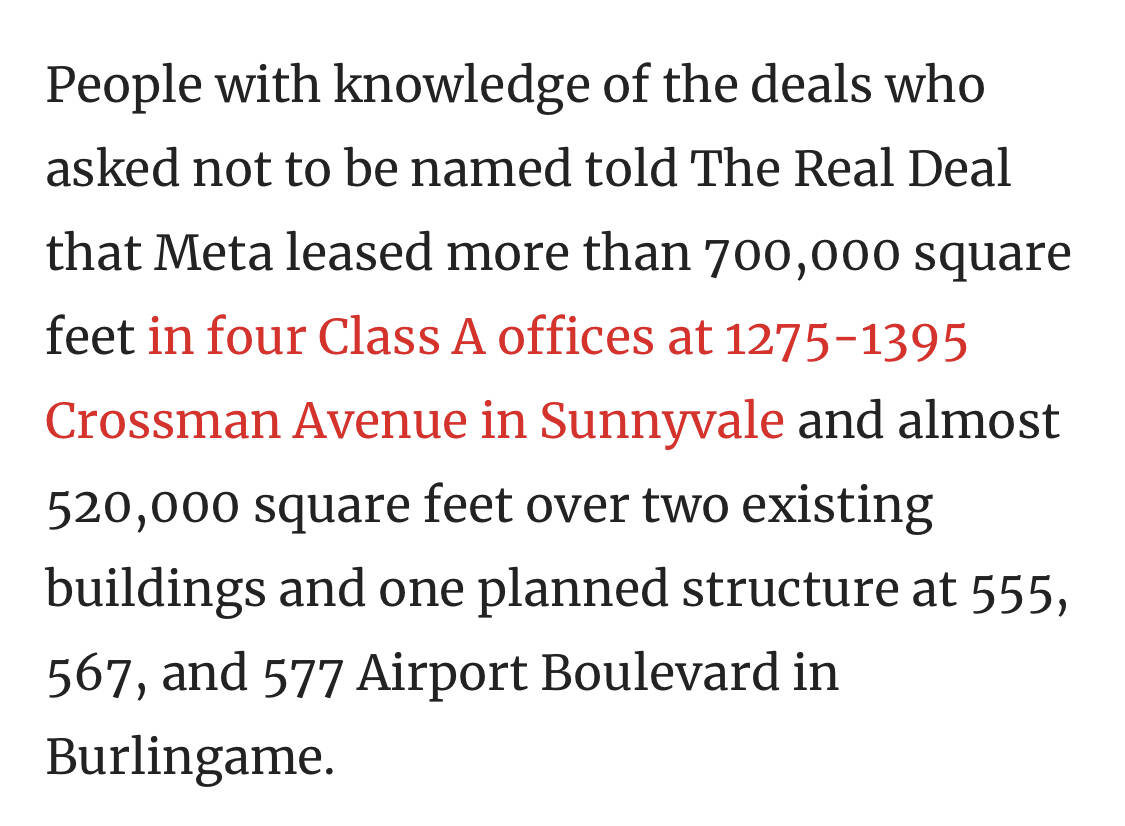
— Meta Platforms, whose apps include Facebook, leased 719,000 square feet in northern Sunnyvale, consisting of a four-building campus near the corner of Crossman Avenue and Caribbean Drive, executives disclosed Wednesday. The lease was arranged through Newmark brokers Mahoney, Michael Saign and Jon Mackey.
— Meta leased 520,000 square feet in Burlingame on Airport Boulevard in a project known as Peninsula Innovation Point, in a deal also revealed on Wednesday.
— Apple in March leased 698,000 square feet at Sunnyvale’s Pathline Park, agreeing to rent several buildings, in a deal arranged by commercial real estate firms CBRE and Cushman & Wakefield.
— Apple is also pushing forward with a new campus in north San Jose.
— Tesla has rented a big office building in Palo Alto, a deal that was made even after the electric vehicle manufacturer’s chief executive Elon Musk said the company would move its headquarters to Texas. Tesla is keeping its vehicle factory in Fremont, at least for now.
— London-best investment giant AGC Equity Partners paid $780 million for three buildings in a section of the Coleman Highline mixed-use tech campus in north San Jose. That was the most money paid for a commercial real estate property in Silicon Valley so far in 2021 in a single transaction.
— Google is pushing forward with a big new mixed-use neighborhood in downtown San Jose, new office hubs in north San Jose, and major development projects that will create campuses in Mountain View and Sunnyvale.
“We count a sum total of four Silicon Valley companies that have moved their headquarters in the past 18 months, and from our standpoint, four data points aren’t enough to call it a trend,” said Russell Hancock, president of Joint Venture Silicon Valley. “All four of those companies have backstories, and their reasons seem to be fairly particular to the piques of their CEOs.”
It’s entirely possible that the headquarters relocations that have occurred won’t erode the huge employment hubs the companies have in Silicon Valley.
“What’s most telling is that the workforce is still here,” Hancock said. “Take Tesla for example. Mr. Musk left for Austin but the rest of his team is still right here where he left them. In fact, they’re expanding in Palo Alto.”
And the Meta lease in Sunnyvale is not only a major deal for Silicon Valley, it’s the largest office rental deal of 2021 — in the entire United States — according to several top experts that include Mahoney.
“Tech companies will continue to grow here given the extraordinary talent pool in Silicon Valley,” Mahoney said.
Plus, the economic dislocations and uncertainties that the coronavirus spawned won’t permanently hobble business decisions about returning to the office in the Bay Area, observers opine.
“The virus will pass,” Mahoney said. “It’s a productivity tool to be here.”
Overall, things appear to be looking up for Silicon Valley’s tech sector and commercial property markets because of the high-tech industry’s renewed appetite for office space and expansion.
Additional major leases could be in the works for the Sunnyvale area alone and are expected to be completed in short order. By some estimates, upcoming rental deals could total 1.2 million square feet.
The reality of the rental deals and property purchases offset the predictions of long-term economic malaise in the region, experts say.
“The news of Silicon Valley’s tech exodus is greatly exaggerated,” said David Sandlin, an executive vice president with Colliers, a commercial real estate firm.
1 Like
Using anecdotal events to conclude something  Give me a deeper analysis!
You don’t need these BS to inform your decision making. You know that , we know that.
These type of journalism is lazy. Didn’t bother to dig deeper, appealing to shallow thinkers. I can easily come up with a scenario…
Say without xxx issues, would lease 1 million sqft.
But because of xxx issues, would lease 500k sqft and lease the other 500 sqft in other places.
So merely making conclusion that leasing 500k sqft means xxx issues are overblown is incorrect without digging deeper. Anyone can make this kind of no-digging observation. Expect journalists to do more work.

So, will SV home prices go up by 50% in the next 5 years???
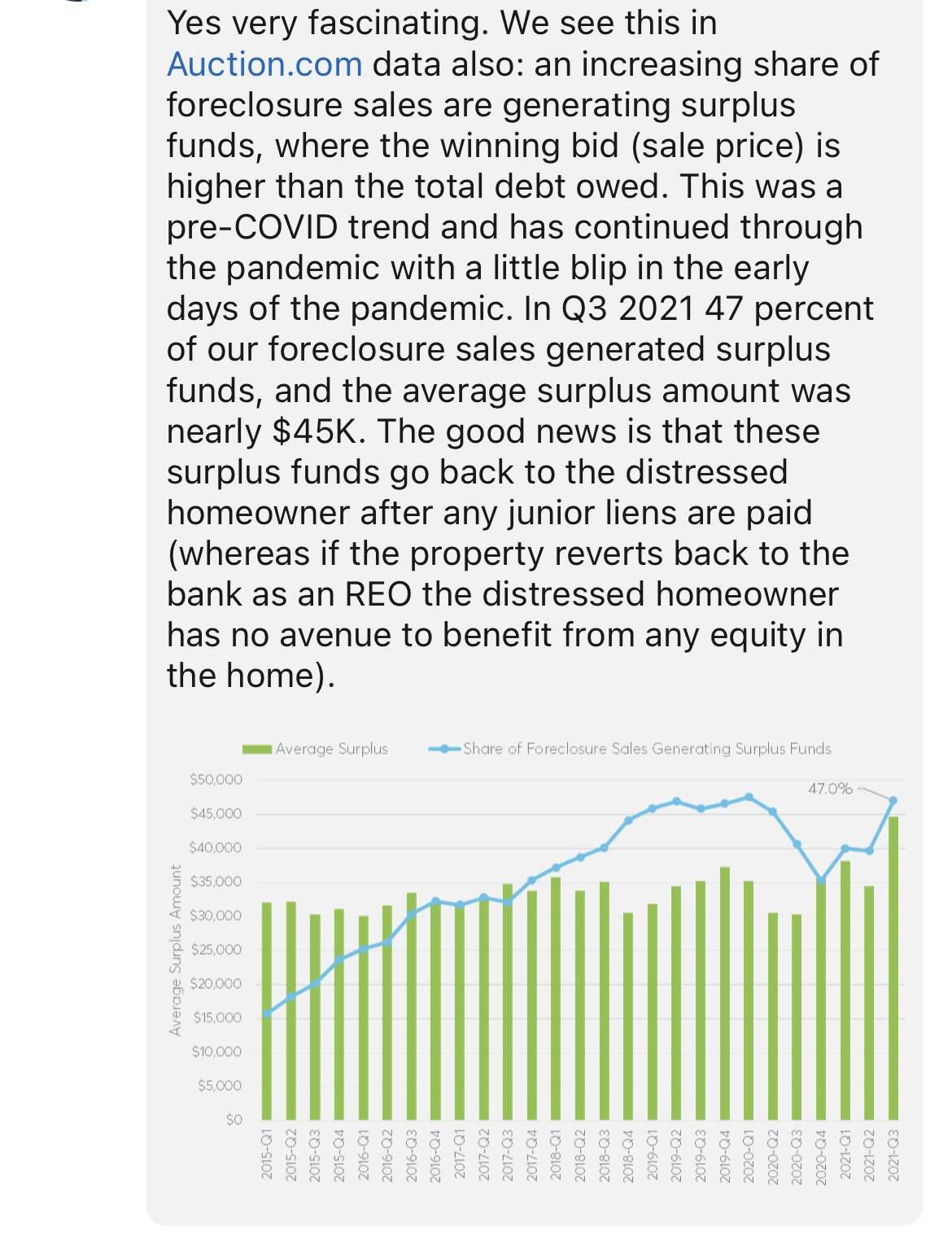
Three percent of borrowers, or approximately 264,000 homeowners, are now delinquent on mortgages after their programs expired, and 38,000 are in active foreclosure.
Plenty of individuals and investors ready to deploy their money and buy!
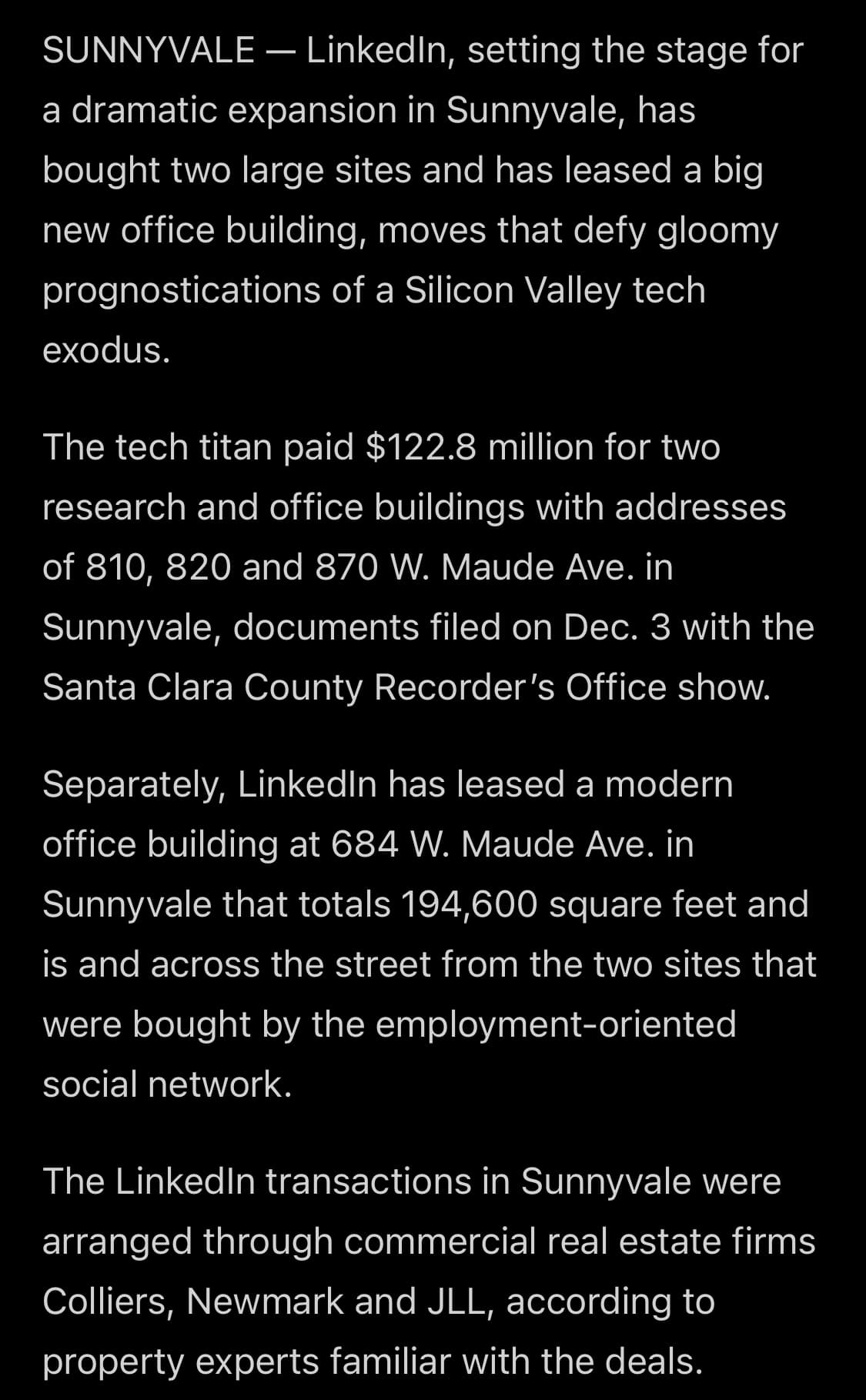
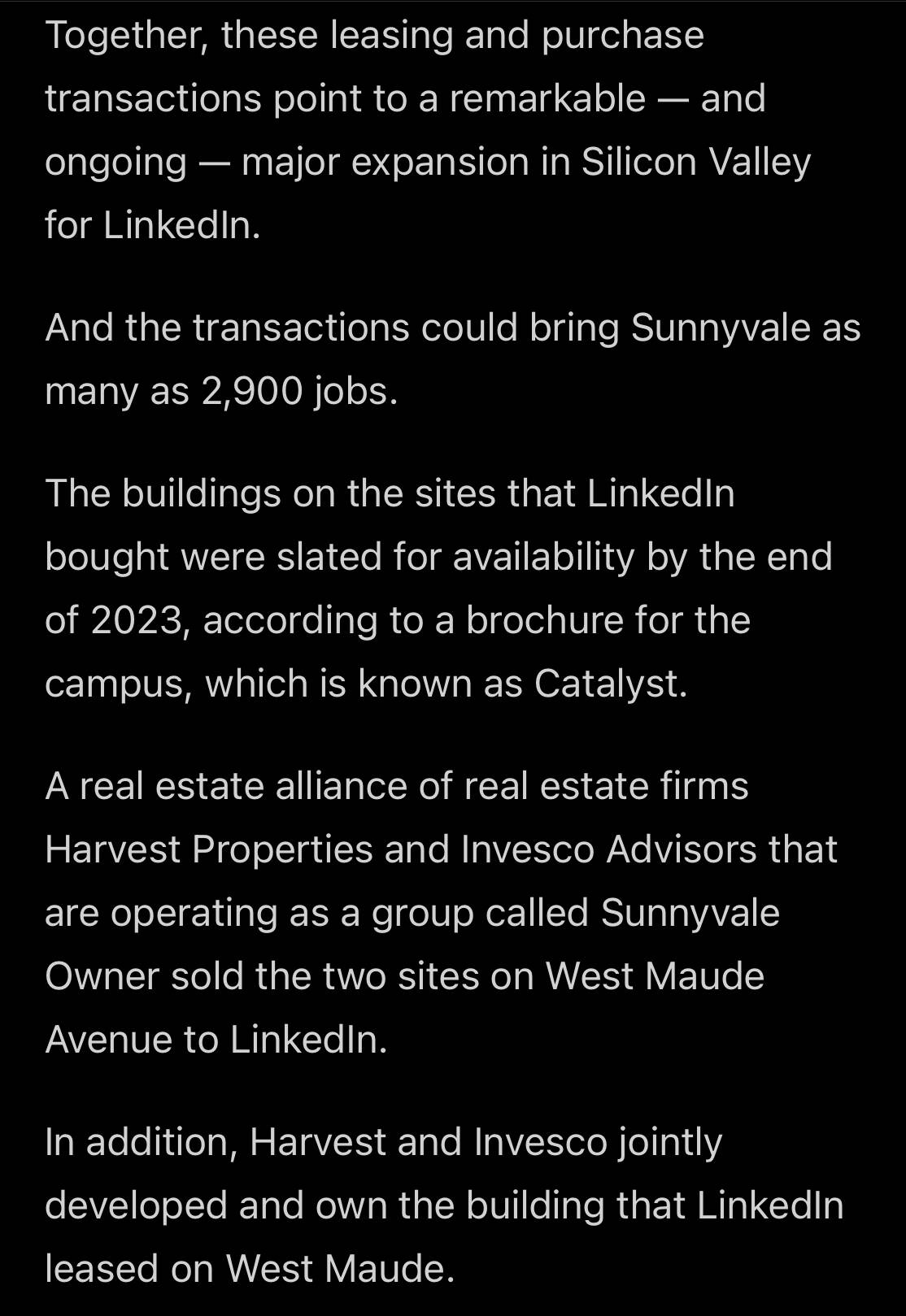
Why are all these companies, Meta, LinkedIn etc, buying/leasing so much office space? Employees will at best use offices in hybrid mode (I.e., once in a while) going forward. For that, they don’t need big offices. Just arrange open seating with nice furniture, get rid of the cubicles that take up space…